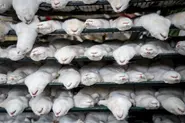
Coronavirus transmission from minks to human does not necessarily mean the disease will become more dangerous, but
scientists are on their guard in the wake of an astounding announcement from Denmark.
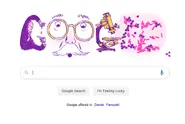
Author Hans Christian Andersen is one of Denmark’s most famous figures from the 19th century, but can you name another Hans Christian, who left his mark on the world of science?
Global scientists on Wednesday unveiled the first blueprint for a massive quantum computer that could be as large as a football pitch and offers hope of solving the world's most vexing problems.
At the University of Copenhagen, scientists have developed an experimental project called Protein2Food with the mission to replace meat with protein-rich crops.
Researchers at Danish companies and universities are set to announce the development of a new technique that will allow plants to be used as fuel in ship engines.
Denmark's food and environment ministry is putting its weight behind new technology that will make Christmas trees grow faster, giving a boost to both Danish industry and Christmas spirit.
Danish researchers have identified the parts the brain which light up when subjects see images associated with Christmas, as part of a project to help the millions who suffer "a Christmas spirit deficiency – or the ‘bah humbug’ syndrome".
Danish physicist Lene Hau missed out on the Nobel Prize for physics on Tuesday but she is behind something that Albert Einstein thought was impossible: stopping light. Here are ten things you need to know about her.
Fifteen skeletons uncovered this week in Aalborg are assumed to be the remains of 15 soldiers who died fighting in a Danish civil war nearly 500 years ago.
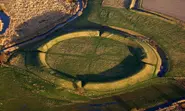
It's been long thought that Denmark is the home to four Viking ring fortresses, but the first discovery in 60 years may shed new light on the Viking Era and King Harald Bluetooth.
A study from the Natural History Museum of Denmark and the Smithsonian finds that ancient eskimos are not related to modern Native Americans or the Inuit of Greenland.
As a thank you to his Danish colleague, Charles Darwin sent 77 personally identified crustacean species to the Zoological Museum. At the time, they were merely filed away but today – 160 years later – they represent one of the biggest Darwin collections in the world.
An Aarhus University research team's revolutionary new approach to exposing HIV cells was hailed as the single greatest advancement in Aids research presented at the International Aids Conference in Australia.