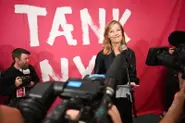
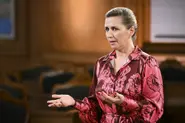
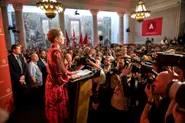
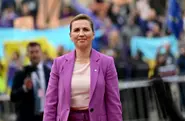
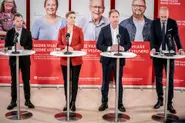
Prime Minister Mette Frederiksen, poised to form a new government after winning Denmark's election this week, is a social-media loving leader who has overseen her Social Democrats' monumental shift to a "zero refugee" policy.
Denmark’s election ended with a dramatic last-minute twist that saw a single seat move to the ‘red bloc’ of left-wing parties, giving Prime Minister Mette Frederiksen a left-wing majority that had earlier looked unlikely. Several things are worth considering as the country now braces itself for negotiations to form its next government.
A day after scoring a narrow election victory, Prime Minister Mette Frederiksen tendered her resignation on Wednesday to begin the process of forming a new, broader government.
The counting of votes in Denmark's parliamentary election went up to the wire last night, with the "red" bloc reaching 88 mandates out of 90, until the final count of two Greenland mandates secured them a majority.
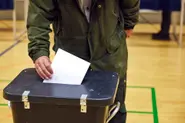
81.4 percent of eligible voters went to the polls in Tuesday's parliamentary election, which is the lowest turnout in more than 30 years, according to KMD, the IT company responsible for the official counting of the election results.
The ‘red bloc’ faction of left-wing, centre-left and green parties took the narrowest of majorities in Denmark’s election on Tuesday night. What happens next and what might the next government look like?
Denmark's left-wing bloc led by Prime Minister Mette Frederiksen reached out to the centre for broader collaboration
on Wednesday after winning a one-seat majority in a nail-biter general election.
A incredibly tight election in Denmark has left Prime Minister Mette Frederiksen in a strong position as she looks to shape the country's next government.
Fewer people have so far voted in today's parliamentary election, compared to this time at the last election, according to a Ritzau survey among 460,000 voters in 13 of the country's 98 municipalities.
Denmark votes on Tuesday in what promises to be a tight parliamentary election in which incumbent Prime Minister Mette Frederiksen's survival could depend on a new centrist party.
Millions of people in Denmark go to the polls today to decide on a new government but what exactly happens on election day? We run through the main events.
Wondering where to find that article about public sector pay or our explainer on the bloc politics system? Are you unsure who all those parties actually are and what they are promising? Find all our election coverage here.
The outcome of Denmark's election could lie with new centrist party The Moderates, according to a final opinion poll, as neither the right or left wings look set to gain a majority.
Danes go to the votes in just one day -- on November 1st -- to choose their government for the next four years, but the outcome of the election is becoming increasingly hard to predict. These are the political talking points from the final week of campaigning.
Facing off with incumbent Social Democratic Prime Minister Mette Frederiksen, the right and far-right opposition are mainly lining up behind two candidates to form the next government after the November 1 election.
Denmark currently has 13 parties in parliament, encompassing the political spectrum from right to left and including three parties formed since the last election. What are their main differences and signature election issues?
Election campaigning is in full swing in Denmark. But which political parties are reaching out to voters who don’t speak Danish as a first language? Emma Firth dug through the websites of the 13 political parties currently in parliament to see which are doing the best job courting English-speaking voters.
Policies aimed at addressing Denmark’s social and health care labour shortage include making the country a more attractive place to work for foreign professionals, a government minister told The Local on Friday.
The governing Social Democrats said on Wednesday that they will set aside up to three billion kroner for potential health sector pay increases, should the party retain power after next week’s election.
The Moderate party, formed in 2020 by former prime minister Lars Løkke Rasmussen, has again gained support in the latest opinion poll ahead of Denmark’s election on November 1st.