
Not a lot is the honest answer.
We know that the new government will include the Social Democrats, Green Left Party, Moderates, and the Social Liberal Party. We know (I think) that it will be led by Social Democrat leader Mette Frederiksen. This marks her third term as Danish leader.
We know that both far-left parties, the Alternative and the Red-Green Alliance, have agreed to support the new government and Mette Frederiksen as Prime Minister in parliament, although they will remain outside the government.
This is despite the fact that the Red-Green Alliance has enough seats to give the government a majority on its own.
As far as we know, it's not yet clear if all or even any of the four Greenlandic and Faroese parties have struck an agreement to support the government, and if so, what they have received in return.
With only the two far-left parties, the government will have the support of 98 of the parliament's 179 seats. With the Greenlandic and Faroese parties, it will have the support of 102 seats.
The government parties themselves control only 82 seats, putting them 8 seats short of a majority.
You can analyse the new government using The Local's widget.
READ ALSO: Denmark finally gets a new government after record 69 days
What do we know about the government's political programme?
Prime Minister Mette Frederiksen has so far kept her cards close to her chest, but when she announced that an agreement had been reached, she gave some hints of its direction.
"This is a government basis that is good for the people in Denmark, the generations to come - and also for animals," she said.
The reference to "generations to come" indicates that the new government platform will be a green one, with perhaps a greater emphasis on climate action than the last coalition of the Social Democrats, Liberal Party and Moderates.
The reference to "animals" suggests that the government will take action to improve conditions for pigs at Danish factory farms – something that was a major issue in the campaign and a major demand from the Alternative.
Peder Hvelplund, chair of the parliamentary group for the far-left Red-Green alliance, said that his party agreed on the "overall direction" of the new government and claimed to have had a "significant political impact" on the programme.
At a press conference on Tuesday morning, Pelle Dragsted, the Red-Green alliance's political chair, said that the new government aimed to make dentistry free in Denmark, starting with pensioners who have retired early, then chronically ill and other vulnerable people in 2027, with all Danes having free dental treatment within 10 years.
He also said public transport would become cheaper, with free travel on trains and bus for young people up until the age of 22.
Finally, he said that VAT on food would will be halved and completely removed on fruit and vegetables.
The Alternative claimed in a press release that it had got its demands on higher animal welfare standards for intensive pig farmers into the new government program, with the new government agreeing to stop extreme breeding practices, end illegal tail docking, phase out the confinement of sows, and give pigs more space.
Danish state broadcaster DR has also said that the new government is open to bringing back Great Prayer Day, or Store bededag, the public holiday abolished in 2023 in one of the most unpopular acts of the last government. This will not happen until 2030, however, and it will only happen if certain conditions are met.
DR has also learned that the government plans to remove the ceiling for free fertility treatment so that prospective parents can get fertility treatment for as many children as they want. Today, it is possible to have up to six fertility attempts for up to two children.
When will we find out more?
While politicians from the parties involved in the party may leak out small details over the day, the big reveal will come at 4pm when the four government parties hold a joint press conference to announce the regeringsgrundlaget, the government programme/platform. This is when we will learn about some of the more uncomfortable compromises the parties have been forced to make.
While there may be some information on which party which get which ministerial positions, that information is expected to be revealed in full on Wednesday.
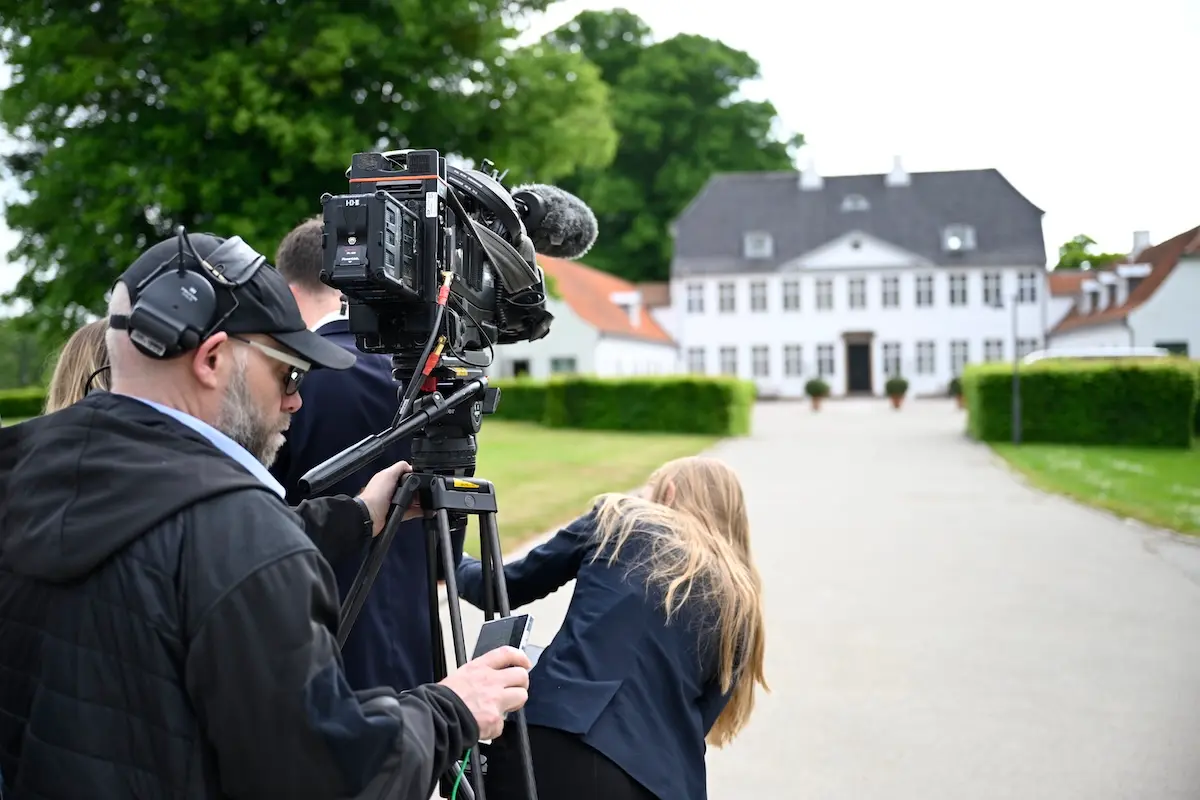
On Tuesday, the leaders of the four new government parties met the Red-Green Alliance together for the first time for talks at Marienborg, the prime minister's country residence. Up until that point the Red-Green Alliance had only negotiated with the Social Democrats.
How have the new opposition parties reacted?
The parties who will form Denmark's new opposition have been targeting their fire on Lars Løkke Rasmussen, the leader of the Moderate Party, calling him a traitor and a self-interested politician interested only on continuing as a minister.
Earlier in the negotiations, Rasmussen was part of talks led by Liberal Party leader Troels Lund Poulsen over forming a right-wing government. He broke off the talks to resume discussions with Frederiksen.
"Overall, this is a result of Lars Løkke Rasmussen's betrayal of the right-wing parties," said Inger Støjberg, leader of the Denmark Democrats. "In my opinion, it is an act of treason for Lars Løkke Rasmussen to be part of a government that relies on the support of the Red-Green Alliance."
Jacob Jensen, the acting Minister of Food, Agriculture and Fisheries, who comes from the outgoing Liberal Party, savaged Rasmussen for teaming up with the far-left, calling Pelle Dragsted, political chairman of the Red-Green Alliance a "friend of the Blekinge Street Gang" (Blekingegadebanden).
The Blekingegadebanden was a far-left criminal group that in the early 1980s committed a chain of robberies in Denmark, sending the money to the Popular Front for the Liberation of Palestine.
"It's pretty crazy that Lars Løkke Rasmussen has chose to cooperate with an extreme left wing party which stems from Leninists, Marxists and communists, in order to secure himself a ministerial car," he wrote on Facebook.
Comments