
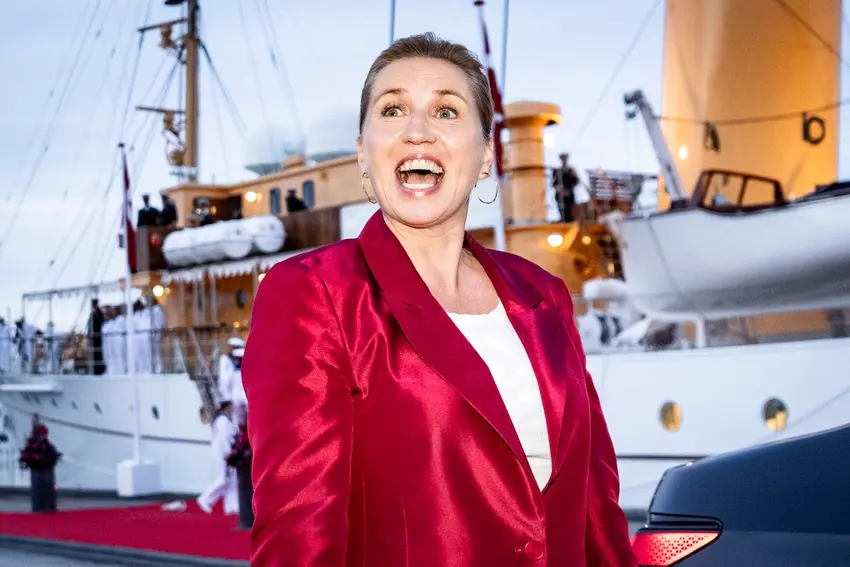
On Monday evening, Frederiksen visited King Frederik X on his royal yacht Dannebrog, which was moored in Odense, to formally inform him of the new government.
"This is a government basis that is good for the people in Denmark, the generations to come - and also for animals," Frederiksen said announcing the deal. "There has been a lot that has been difficult, but I would also say that this thing should succeed".
"We live in the world's best country, and we have one of the world's best democracies, and if we, as politicians – even if there are twelve parties in the parliament, weren't able to manage this task, then I don't really know what the Danes would be able to expect of us."
Frederiksen said she would present her political programme on Tuesday, and on Wednesday the new cabinet.
Neither the left nor the right bloc won a majority in the March 24 election, which left parliament splintered.
The four parties in the new coalition between them hold 82 of the 179 seats in parliament. Media reported that a separate alliance of leftists and greens could support the coalition.
"I think everyone will be surprised to see how determined we are," said Frederiksen.
In the election, her Social Democrats registered their weakest score since 1903 but remained the biggest party by far, with 38 seats.
After the vote, initial talks led by Frederiksen and later efforts headed by the liberal Venstre party had each failed to strike an agreement, before the king reappointed the premier for a further attempt.
In the election, the traditional far-right party, the Danish People's Party, more than tripled its result to nine percent of votes.
It has heavily influenced policy since the late 1990s but slumped in the 2022 election.
The three anti-immigration groups together garnered 17 percent, a stable figure for Denmark's populist right over the past two decades.
With reporting from AFP
Comments