
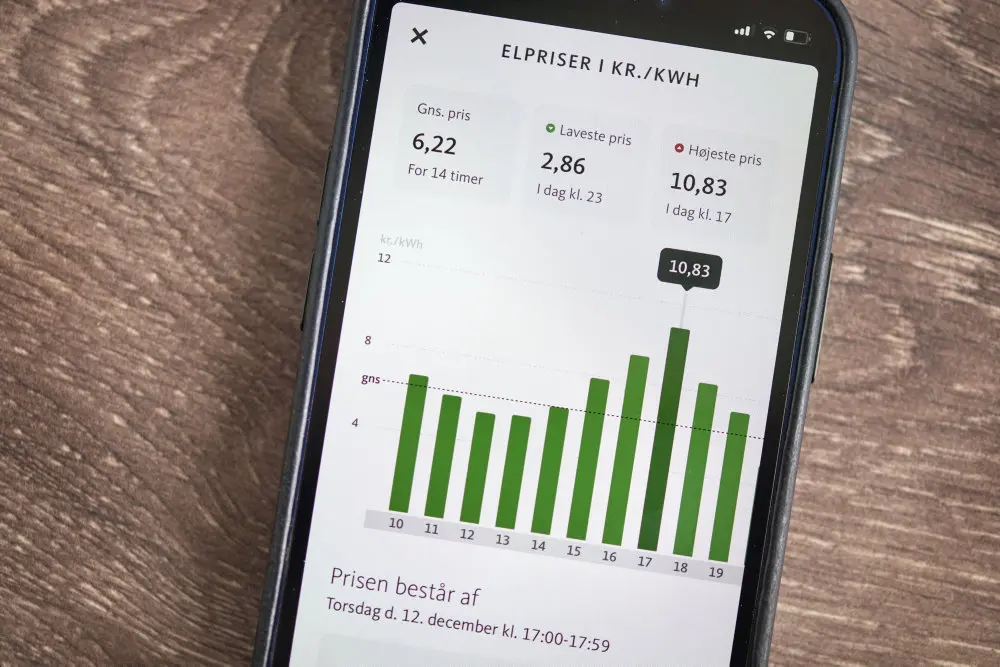
Electricity cost slightly more in Denmark last year than it did in 2023, but costs remained well below the peak levels seen during the energy crisis in 2022.
A review of last year’s energy prices from government agency the Danish Utility Regulator (Forsyningstilsynet) shows that electricity cost an average of 2.73 kroner per kilowatt hour in 2024.
That represents an increase, albeit a small one, from the average price of 2.71 kroner per kilowatt hour in 2023.
A slight increase in the average price represents stabilisation but energy is still far more expensive in Denmark than it was in the years prior to the Covid-19 pandemic and 2022 energy crisis.
“During the 2010s, electricity cost around 2.30 kroner per kilowatt hour,” economist Brian Friis Helmer of Arbejdernes Landsbank said in a written comment to newswire Ritzau.
The positive side is a 30 percent fall in the price of electricity since the energy crisis, he noted.
A family with an annual consumption of 4,000 kilowatt hours would have paid just under 11,000 kroner in electricity bills last year. That represents a saving of 4,600 kroner compared to 2022, according to Helmer.
“Compared to before corona their electricity cost around 1,500 kroner more, though,” he noted.
It should also be kept in mind that electricity prices in Denmark vary during the course of a day as well as season by season, due in large part to weather conditions, with much of the country’s energy sourced from energy and wind power.
READ ALSO: How a new app function can help cut your Danish electricity bill
Several examples of this were seen in 2024, such as high prices of 11 kroner per kilowatt hour in December when wind levels were unusually low.
Conversely, last year saw a record number of hours with negative electricity prices, energy and insurance companies said in December.
Western Denmark had, by last month, seen 371 hours of negative electricity prices, 32 percent more than in 2023. The east of the country had 275 such hours, a 19 percent increase.
A ‘negative’ electricity price doesn’t mean customers are paid for switching the lights on, because taxes and transport costs must still be added to the base price.
Comments