
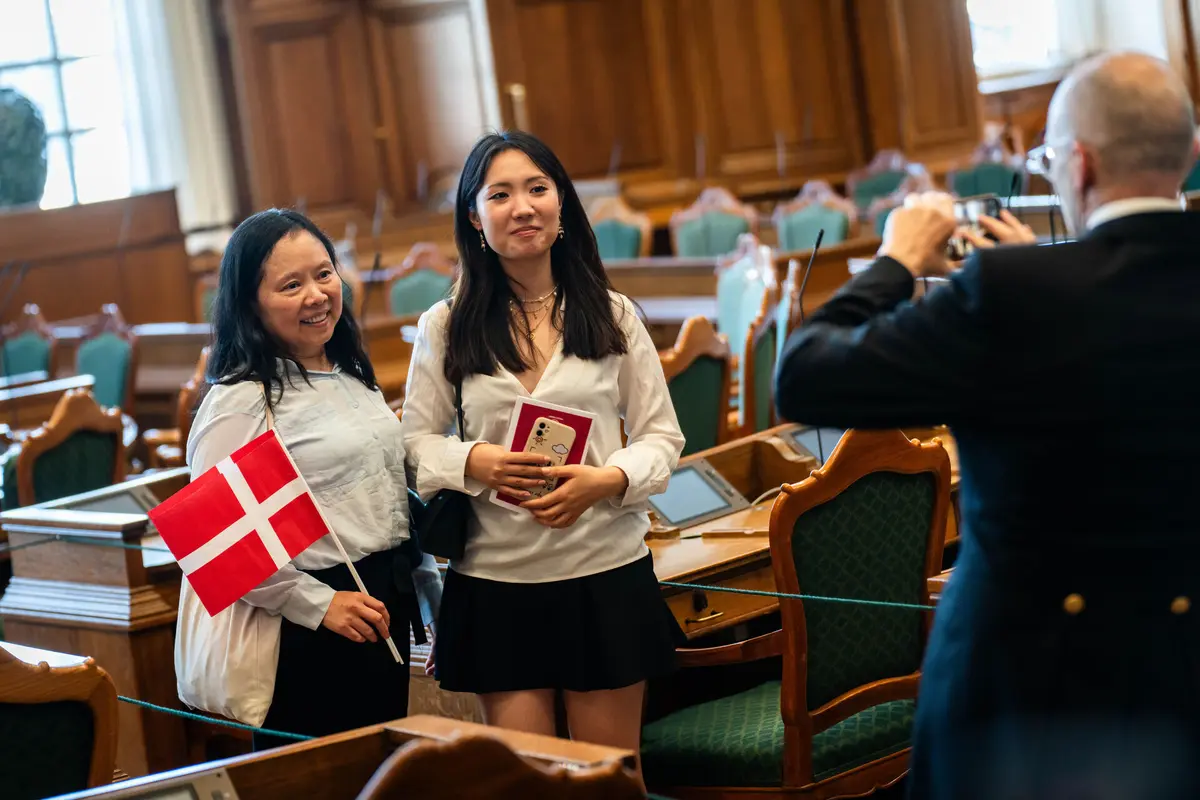
This week has brought a new innovation to Denmark’s famously lenient [insert irony here] process for awarding citizenship.
Three individuals who hope to become naturalised Danes have been ‘invited’ to explain themselves in front of parliament’s powerful citizenship oversight committee, Indfødsretsudvalget, after concerns were raised that they do not exhibit the sort of mindset that chimes with Danish democratic values.
I’ll leave the specific nature of these concerns to other reports which have covered the matter, but if the views – reportedly expressed in historical social media posts – are genuine, they’re certainly ones I disagree with. I also imagine the views to indeed be a bad fit with Danish democratic values, however you might exactly define these.
There’s been a reasonable amount of controversy over the interviews, which appear to have been hastily arranged. The Ministry of Justice is unsure whether they comply with the ECHR. A senior member of the Citizenship Committee quit the committee over them.
The committee members who support the interviews – mostly the MPs from conservative parties, but also the Social Democratic member – yesterday said the first interview went well and that they got a better idea of who the individual was and what their views are.
The biggest supporter of the concept seems to be Mikkel Bjørn of the anti-immigration Danish People’s Party. Bjørn has said he wants the model to be extended because it gives a better idea of who applicants are, and what their views and values are, than can be formed from an assessment of the objective criteria for citizenship.
There’s a debate to be had here about how much politicians get to decide whether a person’s individual views are right or wrong and Bjørn himself has history for pushing the boundaries of decency when it comes to expressing political views.
Setting that aside, I think there’s a lot of value in Bjørn’s idea that politicians should speak to incoming Danish citizens and naturalised Danes.
In justifying the interviews, the politicians have said they are needed to make sure citizenship isn’t awarded to people who don’t share Danish values and even worse, could end up being a threat to the country.
If they spent more time listening to foreigners who live in Denmark, not least those of us who are so emotionally and practically tied to the place we want to actually be Danish, they’d surely see what an absurd presumption that is. Maybe even a hardened sceptic like Bjørn would soften up a bit.
I’m going to bring up my personal situation here, because I think it’s a fairly representative example.
I want to be a Danish citizen. I’ve lived here for quite a lot longer than the general residence requirement of nine (yes nine) years. I speak Danish, write in Danish, watch TV in Danish, dream in Danish. I have a Danish wife and children. My job is dependent upon me living in Denmark. I’ve paid off my Danish student debt, paid tax (so much tax) and been squeezed by rising living costs like everyone else.
By the time the next general election comes around, I’ll have lived in Denmark for more than 18 years – since before the youngest voters were born.
Give me a good reason why I shouldn’t be a citizen with equal voting rights in that election?
READ ALSO: How to apply for citizenship in Denmark
Danish politicians from various parties often like to parrot the idea that Danish citizenship is a “gift”, something you “earn the right to”.
It absolutely should be limited in the number of people who are given it by naturalisation, and that means consistent and yes, quite strict rules should apply.
But let’s turn the idea on its head for a moment and argue that actually, there comes a point when Denmark owes you citizenship – or at least a democratic voice – if you’ve spent years, decades even, contributing to the tax system and contributing in every other meaningful way that any member of society is expected to.
I can only imagine how intimidating it must feel to sit in front of powerful Danish politicians who can decide whether or not you get to be a citizen, trying to explain what your views are and whether or not you are democratic enough (can you be democratic if you can't vote?).
But if the politicians had an insight into the lives and motives of those of us who want to become Danish citizens – which they could gain from engaging with us on a more level playing field – they’d know that we are not some lurking threat, driven by dubious antidemocratic desires.
We are, in fact, a group of people with whom they share an overwhelmingly positive view of their country of birth, and only want the best for it. After all, Denmark is our home too.
Comments (5)