
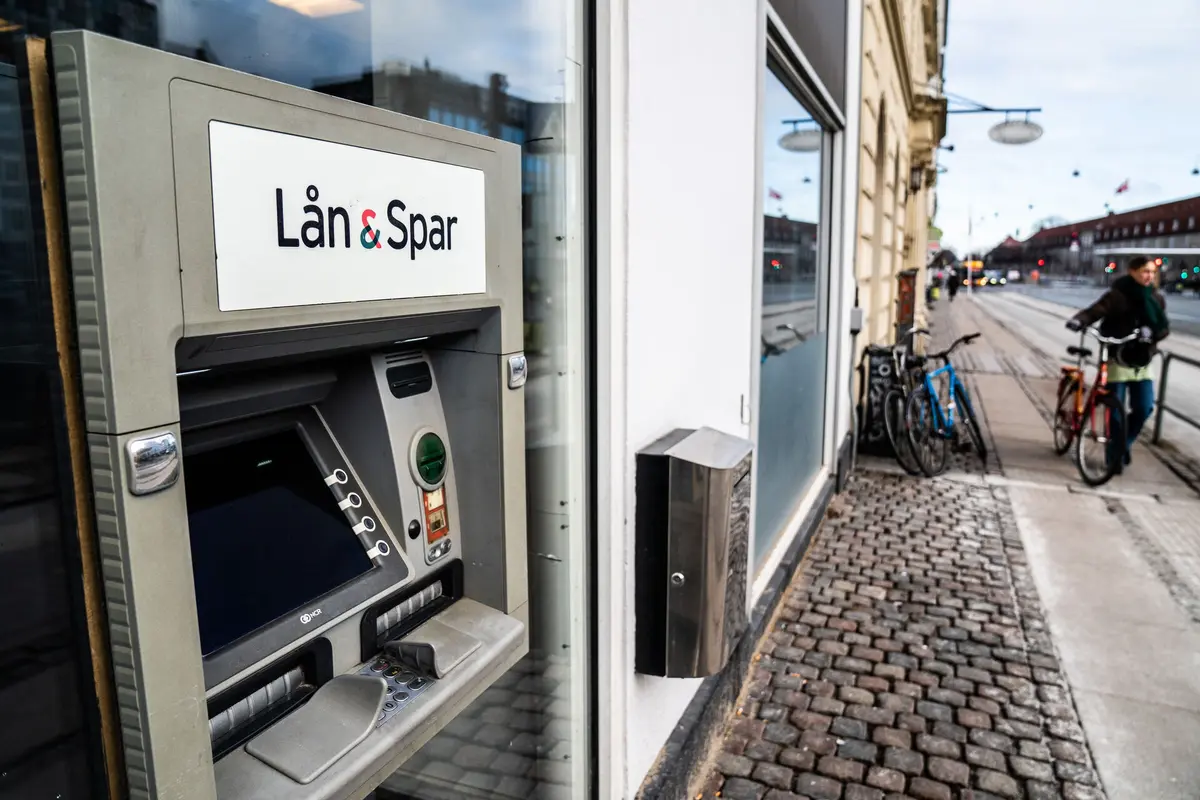
Big differences between products on offer at individual banks can be found in Denmark depending on the customer’s needs, according to a sector expert.
“Interest rates on savings and lending, as well as fees, can vary a lot. So a lot of savings can be made if you have a good look around,” Jens Hjarsbech, senior economist with bank comparison service Mybanker, told the Ritzau newswire.
Danish customers tend to be loyal to their banks, data show. A report from the Danish Competition and Consumer Authority in 2022 found that customers stay with the same bank for an average of 21 years.
READ ALSO:
- The 'best' banks for foreigners in Denmark
- REVEALED: Danish banks’ policies on non-Danish speaking customers
One way to tackle a potential change of bank is to start by investigating the level of customer engagement with your current bank, according to Morten Bruun Pedersen, a senior economist with consumer rights group Forbrugerrådet Tænk.
‘Consumer engagement’ is a term used to describe the ways in which a business interacts with its customers to build up a relationship, for example through emails, welcome messages, customer support, loyalty incentives and feedback surveys.
“When you have a general idea of this, you can try putting your information into a comparison service like Mybanker.dk. You can also contact banks directly and ask what services they offer,” Pedersen said.
“If you are expecting to be in need of a large sum of money in the near future, for example for a car or a mortgage, it’s a good idea to speak with the bank about your options,” he said.
You should also have an idea of your monthly disposable income (rådighedsbeløb in Danish) because banks will generally ask about this, Pedersen said.
This means tallying up all your regular monthly expenses (faste udgifter in Danish) such as rent or mortgage payments, utility bills, childcare, insurance, trade union membership, car running costs and groceries, and finding out how much money you can expect to have left over each month once all these are paid for.
Contact several banks to see what they can offer before making any decision about switching, Hjarsbech advises.
“It will be easier to envisage and compare the costs of being a bank’s customer if you have a concrete offer from several banks. You will also be better able to negotiate the price,” he said.
If things like fees are not explicitly stated, you can ask your bank and others to tell you what they are, or how much it will cost you each year to be a customer, he also said.
“A bank’s customer will typically need a mortgage, car loan and a savings account. It might be the case that a bank has a cheaper mortgage but that the car loan costs more,” he said.
“The biggest expense for a bank customer is usually on loans,” he added.
With regard to mortgages, it’s worth keeping in mind that only a small portion of the money you borrow is borrowed from the bank, with the remainder loaned through the bank’s agreement with a credit institution or realkreditinstitution which puts the loan in bonds.
“Banks don’t really have any control over the loans that are with credit institutions. But there can be big differences between interest rates at banks when we come to the bank loan element, which can be up to 15 percent of the price paid for the property,” Hjarsbech said.
“Early last summer, there was a price war between banks over mortgage interest rates because banks particularly wanted to attract young house buyers who can be their customers for many years,” he said.
Checklist for switching banks in Denmark
When you switch bank, your new bank is likely to request the following information and documents:
A list of your existing bank accounts, a list of your automatic direct debit payments (betalingsservice in Danish), the payment cards you currently have, a photo ID, a list of your regular monthly expenses, and a statement detailing your pension savings, which can be downloaded from the Pensionsinfo website.
If you are transferring loans, you are likely to need your last three pay slips and the most recent annual tax assessment (årsopgørelse). This can be downloaded from the Tax Agency’s website.
Comments