
Electricity customers in Denmark usually pay less for their power in the summer half of the year than during the winter.
While the exact rates can vary depending on the providers in your part of the country, electricity companies generally charge a higher “tariff rate” during the winter months.
The higher rate kicks in on October 1st and means that the cost companies charge for “delivering” electricity through the power grid will be higher.
Consumers in Denmark can take a number of measures to ensure the higher rates have little impact on their bills.
These include practical considerations like using appliances like dishwashers and tumble dryers at night, when the rate for the electricity itself may be lower.
Electric car owners may similarly benefit from careful planning of when to charge their vehicle.
READ ALSO:
- At what time of the day is electricity cheapest in Denmark?
- How a new app function can help cut your Danish electricity bill
- How do I check my Danish electricity plan and decide whether to change?
The winter tariffs remain in place until March, when the summer rates return again.
Below is an example of the difference between summer and winter tariffs with Radius, an electricity company which operates in the eastern half of Denmark. These values may vary depending on the company which operates the power grid in your area, so it’s worth checking with your own supplier.
The table shows the differences in the tariffs (for this particular company) during “low”, “high” and “peak” periods of load on the grid.
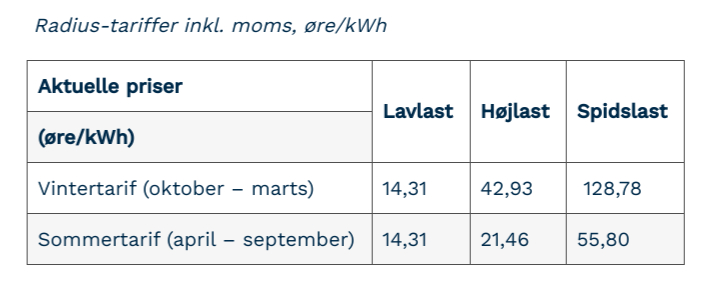 Source: Radius press release
The grid companies’ tariff models are designed to reflect the strain on the systems from consumers in the winter and summer periods of the year respectively, according to the companies themselves.
High strain on the system means capacity must be increased, resulting in higher costs in winter when usage is higher.
“October 1st each year means a price jump for electricity customers and that also means money can be saved if you manage to move some of your consumption away from the expensive hours, especially between 5pm and 9pm,” Cäthe Bay-Smidt, chief to the Radius and Cerius electricity companies, said in a press release.
According to the companies, around 1 krone per kilowatt hour can be saved by moving consumption from peak hours to low-priced ones.
In addition to the evening, early afternoon usage is likely to result in a higher electricity rate.
“If we all stick to good electricity habits and even out our consumptions across the hours of the day, the need for expensive extensions to the power grid become unnecessary and green transitions will also be cheaper,” Bay-Smidt said.
Tariffs paid by customers to electricity grid operators are specifically payments for administration, operation, maintenance, reinvestment and extension of the power grids operated by those companies.
Comments