
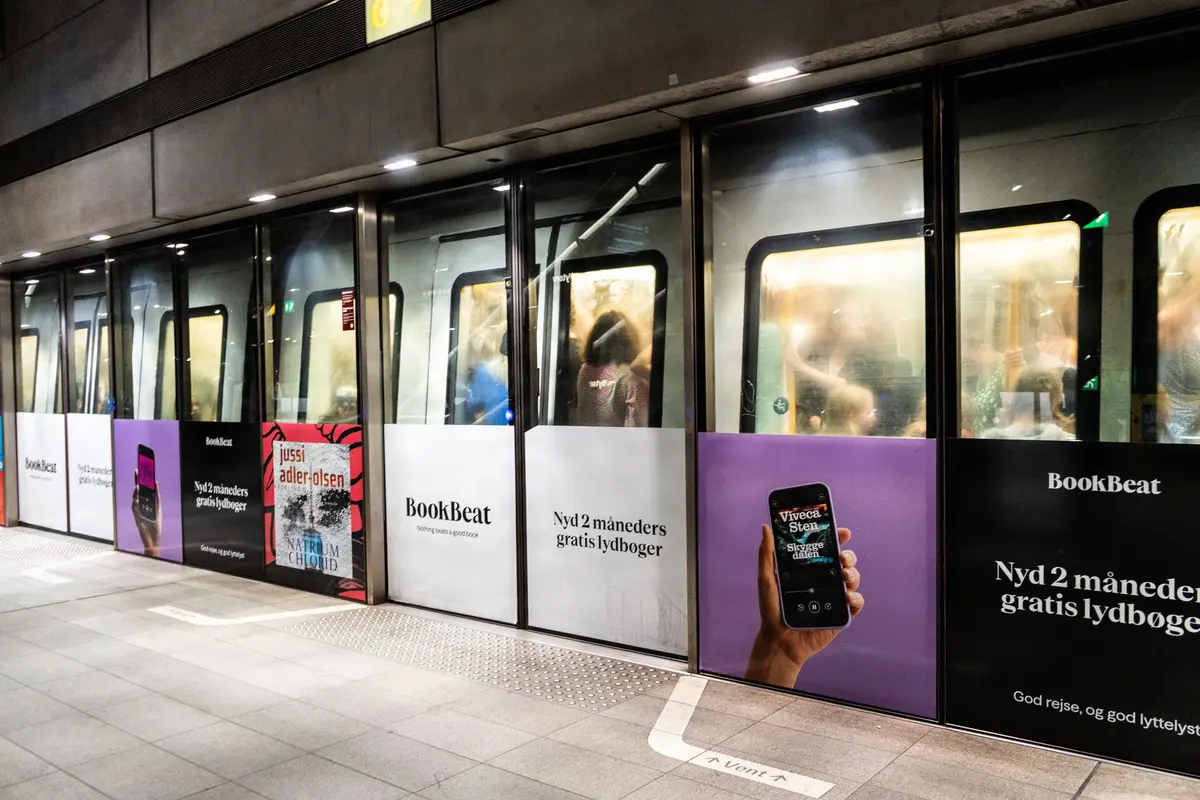
Copenhagen to ban adverts for flights on buses and metro
A majority on the Copenhagen city council voted on Thursday evening to ban adverts for flights, petrol and hybrid cars, cruises and other products which use a large amount of fossil fuels, DR reports.
Karoline Lindgaard, head of policy for The Alternative in Copenhagen, one of the parties behind the proposal, said it was an important step in the right direction.
"We are met by adverts every day trying to sell us flights, cruises and new petrol cars as freedom, adventure and the good life," she told DR.
"But the downside of that consumption is climate change, air pollution and a bill we are all going to have to pay together."
The city council does not have control over adverts displayed in places it does not own or rent, so there will still be adverts for products using fossil fuels in Copenhagen – just not on buses, in the metro, or in other places the city council owns.
Danish vocabulary: fossile reklamer – adverts for products using fossil fuels
More than 120,000 books on their way to Denmark's youngest
Interest for a new government initiative to promote reading among the country's youngest children has been significant, with more than 10,000 nurseries, preschools and childminders signing up.
As part of the scheme, titled Bogfrø, or Book Seed, Denmark's six central libraries will send out book parcels to those who have signed up, alongside educational material. According to the Ministry for Children, The Elderly and Property, more than 120,000 books are set to be distributed.
Jacob Mark, the minister for Children, The Elderly and Property, said he was "extremely happy" about the high interest in the scheme, highlighting among other things the importance of promoting reading following Denmark's historically low scores in global educational survey Pisa earlier this year.
"We know that reading improves our language, empathy and ability to learn. The most recent Pisa survey showed that as politicians, we need to do much more to give our children good conditions to learn how to read, among other things. In my opinion, less screen time, and more time reading aloud with adults is the way forward."
The government has set aside 20 million kroner to fund the scheme, and the book parcels are expected to be distributed from next month.
Danish vocabulary: læselyst – interest in reading
Majority in parliament in favour of lifting ban on repairing electric cars
A proposal to abolish the so-called "repair limit" for electric cars, which essentially means a large number of electric cars cannot be repaired, went through its first vote in parliament on Thursday, with a broad majority in favour.
Those in favour include the Denmark Democrats, who put forward the proposal, as well as the Liberals, Danish People's Party, Liberal Alliance, Conservatives and the Red-Green Alliance.
The governing parties – the Social Democrats, Green Left, Moderates and Social Liberals – also said they were in favour of the idea, but that they want to combine it with planned changes to taxes on cars rather than in a separate law proposal.
Industry organisation AutoBranchen Danmark welcomed the broad support for the proposal.
"This is a sign that finally we're putting an end to the ban on repairing electric cars," the organisations CEO Gitte Seeberg said in a press statement.
Danish vocabulary: forbud – ban
Denmark's 'hard ghettos' row reaches Supreme Court
A group of "non-Western" ex-tenants in a Danish social housing estate face off against their former landlord in the country's Supreme Court on Friday, arguing they were discriminated against when their leases were terminated.
The seven families from Helsingør, north of Copenhagen, had their leases terminated in 2022 under a 2018 law that says all social housing estates where more than half of residents are "non-Western" must rebuild, renovate and change the social mix by renting at least 60 percent of the homes at market rates by 2030.
"Non-Western" is one criterion the government uses to define "transformation areas", which it previously termed "hard ghettos".
The plaintiffs claim their leases were wrongfully terminated, citing discrimination based on ethnic origin.
Denmark's lower courts have so far ruled in favour of the landlord, arguing the expression "immigrants and descendants of people from non-Western countries" used in the law does not refer to a population group of one ethnic origin, and therefore does not violate the Equal Treatment Act.
The lawyer for the ex-tenants, Eddie Khawaja, said the question before the Supreme Court was simple: "It's about whether the criteria regarding the tenants' origin is neutral or not."
In Helsingør, the landlord Boliggården announced in early 2020 that it would carry out extensive renovations on seven stairwells – 96 apartments in total.
It terminated the leases of those tenants, most of whom were of foreign origin.
Khawaja, the plaintiffs' lawyer, said he was optimistic about the Supreme Court's ruling.
"I trust the judges and I'm quite hopeful," he said.
If the Supreme Court rules in their favour, the families would likely be rehoused in accommodation similar to what they were forced to leave.
No date has been set yet for the verdict. (AFP)
Danish vocabulary: ikke-vestlige – non-Western
Comments