
What is the Hjerteløber scheme?
The scheme, which is run by TrygFonden, a fund which aims to improve public safety, allows members of the public to sign up to receive alerts on their phone if someone close by goes into cardiac arrest. They will receive a GPS location of the person in question, as well as directions to the closest defibrillator, if there is one available.
According to TrygFonden, there are 61,540 registered hjerteløbere in Denmark as of mid 2026, which is 1.3 percent of Denmark's adult population. This is also the highest number recorded since the scheme, which was launched in 2017, was expanded nationwide in 2020.
How can I sign up?
The only specific requirements for signing up are that you need to be over the age of 18 and need to be able to carry out CPR. You will also need to download the Hjerteløber app, which essentially means that you also need to have a smartphone supporting it. The app is available in English, although you may need to speak or at least understand Danish to talk to emergency responders if you are alerted to an incident close by.
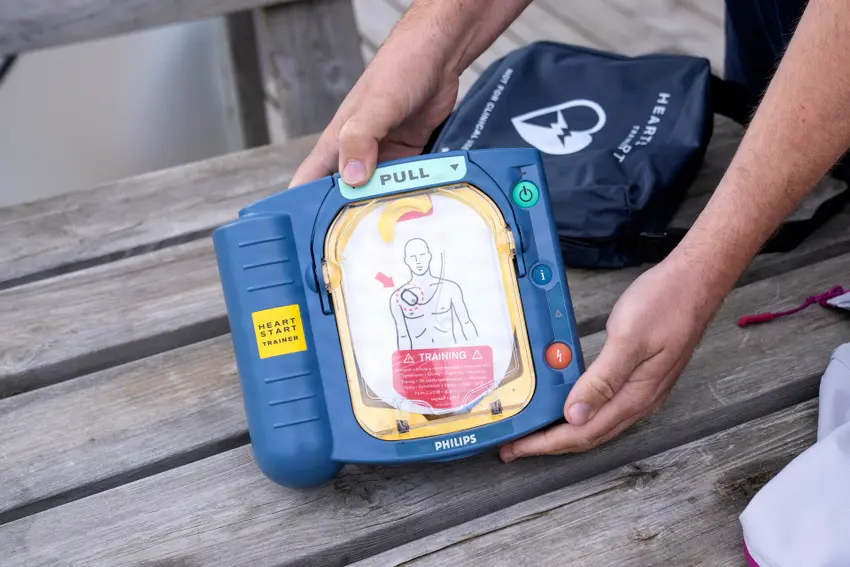
If you have a defibrillator you can also register it with the Hjertestarter app, which is linked to the Hjerteløber system.
What happens if someone goes into cardiac arrest?
In the case of a cardiac arrest, emergency services send out an alert to the 20 closest hjerteløbere, so there may be more than one person responding to an alert. Not all alerters respond, and there is no penalty for not responding.
How important are the hjerteløbere?
Very. Members of the public are often able to get to a patient minutes before the ambulance arrives, which in the case of a cardiac arrest can be the difference between life and death.
"The more heart runners we get, the shorter the response time," doctor and researcher Victor Kjærulf from the capital region's emergency services told the Ritzau news wire.
"After just three to five minutes without blood supply, brain cells start to die. If ten minutes pass, it becomes uncertain as to whether the brain can be revived. So it's crucial to receive assistance quickly."
In the first half of 2026, the average response time for a heart runner was just three and a half minutes.
"An ambulance usually arrives after eight to nine minutes," Kjærulf said. "That's fast in an international context, but not fast when it comes to a cardiac arrest."
"If the person who discovers the cardiac arrest doesn't know how to do CPR and doesn't have a defibrillator, the chance for survival is very small by the time an ambulance has arrived."
Around 5,000 people in Denmark go into cardiac arrest outside of a hospital each year, which corresponds to roughly 14 people per day.
Comments