
Falling fertility could be good news for Denmark's finances
A new analysis from Aarhus University has shown that if the fertility rate drops from 1.7 children per woman to 1.3 children per woman, the Danish state could save 15 billion kroner a year by 2100, according to a press statement by the Rockwool Foundation.
Torben M. Andersen, who is behind the study, said that this is in part due to the fact that Denmark spends a lot of money on children and education.
"The results here show that if fewer children are born in the future, the savings on childcare, schools and education combined are larger than a later loss from a smaller workforce and less tax income," he told the Ritzau newswire.
"Now that we're seeing that Denmark could save money on fewer children in the future it could make sense to investigate whether that applies in other countries we are comparing ourselves to, to find out if falling fertility is a ticking bomb for the economy or not," he said.
Danish vocabulary: fertilitet – fertility
Unusually high amount of jellyfish in Danish water
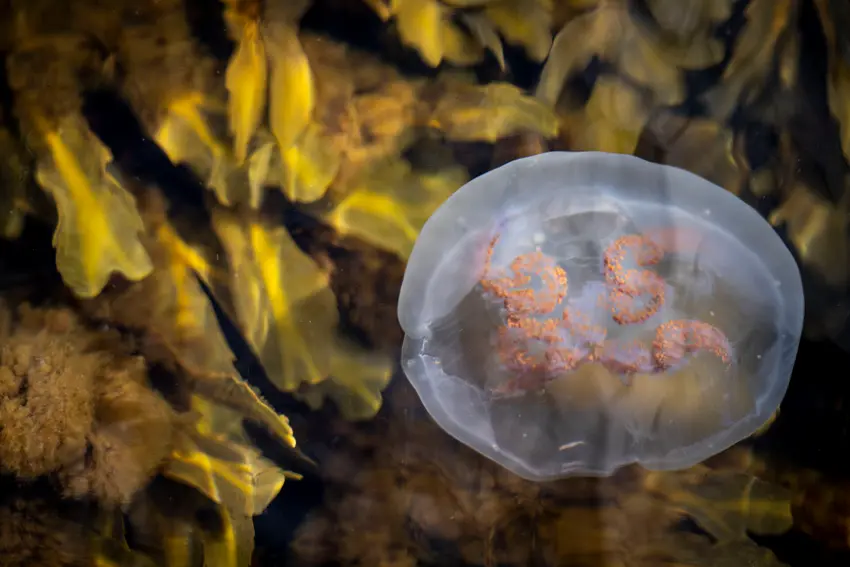
Record-high water temperatures along the Danish coast have led to an explosion in the number of jellyfish, arriving earlier than normal and in larger numbers.
Cornelia Jaspers, biological oceanographer at Copenhagen University, told the Ritzau newswire that this is a result of not just high temperatures but also changes to the proportion of salt in the water.
Denmark saw heatwaves in May and June this year, with unusually warm temperatures and high salt content creating the perfect conditions for jellyfish.
And they are most likely here to stay, Jaspers said.
"If summers get hotter and the salt level stays how it is today, I would expect jellyfish to cause more problems in Danish waters," she said.
The invasive mnemiopsis, also known as the warty comb jelly or sea walnut, has also successfully established itself in Denmark, and will be hard or even impossible to get rid of, she said.
"Once an invasive species is established in an ecosystem it's very hard to get rid of it again."
Danish vocabulary: vandmand – moon jelly (a type of jellyfish that does not sting), brandmand – stinging or lion's mane jellyfish, gople – a jellyfish more generally
Danish weather agency issues heatwave warning for Jutland
The Danish weather agency DMI has warned that most of Jutland will experience high temperatures from Wednesday, to the extent that the agency has issued a heatwave warning.
The warning lasts from Wednesday until Friday evening and covers almost all of Jutland with the exception of municipalities in the south of the region.
Temperatures could reach 30C in some areas.
Denmark defines a heatwave as a three-day period where the average highest registered temperature is above 28 degrees. A national heatwave occurs when this happens across at least 50 percent of the country. DMI does not believe that this heatwave will be national.
The recent June heatwave, where Denmark saw its hottest ever recorded temperature (37C), was national.
National health advice during a heatwave is to eat or drink something salty, avoid alcohol, stay in the shade and/or wear a hat and loose, light clothing if out in the sunshine.
Danish vocabulary: hedebølge – heatwave
Toxic caterpillar app tops App Store for downloads
The 'Arter' app, used to identify the toxic oak processionary moth (OPM) caterpillar, has seen an increase in downloads after the Agency for Green Transition and Aquatic Environment encouraged the public to download it on Friday.
More than 2,200 new users downloaded the app over the weekend, with an estimated 58,000 people in total using the app.
On June 10th, it was the most popular free app in Denmark on Apple's App Store, according to figures from data company Sensor Tower.
The app allows users to submit images of the caterpillar, producing a digital map of their locations. The images are examined by experts who approve them if they show the OPM caterpillar.
The OPM has microscopic hairs which can cause itching and rashes in humans and animals. In Odense, the caterpillars have led to path closures, as well as the closure of a preschool. The caterpillars have since been found elsewhere in Denmark, including on Amager south of Copenhagen.
Danish vocabulary: arter – species
Comments