
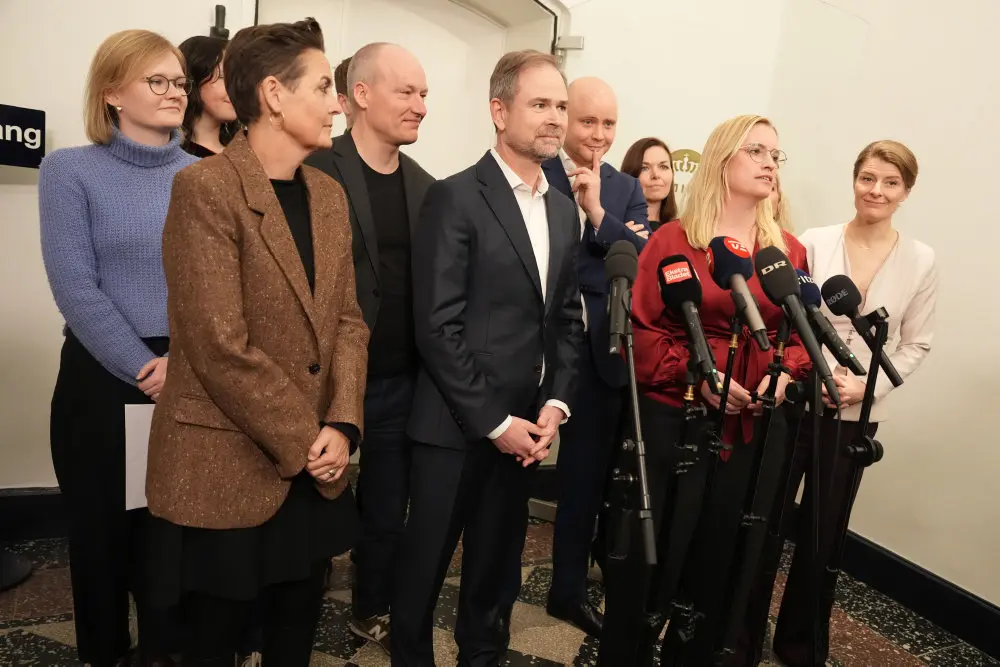
Denmark’s government on Tuesday announced a new fødevarecheck, literally “food cheque” scheme, which will provide tax-free cash payouts to specified groups this summer.
The announcement comes after the government reached a deal with two left-wing opposition parties, SF and the Red-Green Alliance (Enhedslisten), to vote the scheme through parliament.
Eligible persons will receive the money in May and June, the government confirmed during a Finance Ministry press briefing.
“We are not saying this solves everyone’s problems but it will certainly come in handy,” Finance Minister Nicolai Wammen said.
The government is budgeting 4.5 billion kroner for the relief payouts, which will be distributed to over two million people.
Families with children aged under 18, retirees who receive the state pension, unemployed persons and students who live on the state student grant, SU, will be entitled to the money.
Families in which both parents each earn less than around 500,000 kroner a year will receive 5,000 kroner under the scheme. If one parent earns more than around 500,000 kroner a year, the family will still get 2,500 kroner.
State pensioners with liquid assets of less than 350,000 kroner, as well as Danes who were receiving a welfare benefit (offentlig ydelse) as of November 2025, will also receive 2,500 kroner, while students who do not live with their parents and receive SU will get 1,000 kroner.
Pensioners, students and people on benefits are expected to receive their payments in May, while families will receive theirs in June.
Plans for a cash payout scheme were first announced in Prime Minister Mette Frederiksen’s New Year speech as a response to rising food prices.
Food prices are currently on a downward trend but have increased sharply overall in recent years.
READ ALSO: Danish supermarkets say they are likely to reduce prices in 2026
The agreement to pay out the cash sums will now be given expedited treatment in parliament ahead of implementation by the summer.
While two opposition parties have agreed to help the government adopt the measure, others have criticised it. That includes another left-leaning party, Alternative, which has stated it wanted a higher amount to be paid out to fewer individuals, with a lower income threshold for eligibility.
Comments