
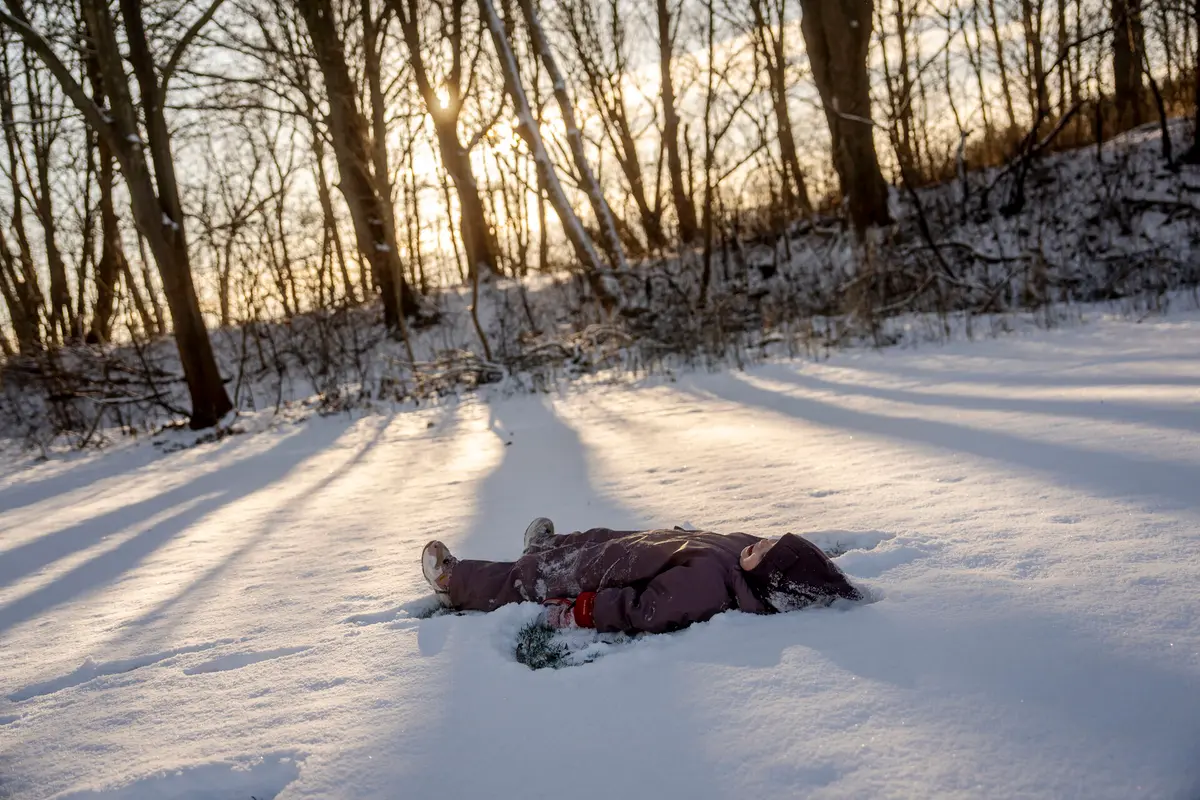
The first week of January has been the coldest so far this winter by some distance.
North Jutland was hit with a ‘yellow alert’ snow storm in midweek and the southern part of the country is currently experiencing snowdrifts. These are caused by strong winds that are pushing around big piles of snow that have built up and not thawed, as temperatures stay below freezing around the clock.
It’s going to be even colder this weekend with forecasts suggesting double digit figures below zero are possible on Saturday night.
Daily life has been largely unaffected by the weather, as you might expect it to be in a Nordic country which has fairly good provisions in place for cold snaps.
Although Denmark is not as cold as the more northern parts of Scandinavia, it has a similar mentality of seeing cold weather as something closer to an opportunity than a burden.
Take childcare as an example of this. I found myself outside shovelling snow in the pitch black at 7am on more than one occasion this week to allow me to get my children to their kindergarten.
There was no likelihood that the kindergarten would be closed. I did, however, have to make sure they were both sent off wearing their kids' balaclavas, elefanthuer in Danish, and full-length snowsuits or flyverdragter. Both are completely essential items of child’s winter clothing.
READ ALSO: How to dress your child for Denmark's cold, wet autumn (and winter)
They also needed wet weather gear and thermal clothing to wear under this, as a spare for when the snow suits are wet and they need to go for their second outdoor playtime of the day.
Incidentally, when I spoke to my colleague from The Local Italy, Clare Speak on Thursday, she described how she’d had to rearrange her day to pick up her nursery-age child from daycare after staff had called her to let her know they were having to close due to cold weather. The local temperature in Italy was 5 degrees.
This puts into contrast the very obvious difference in climates and climate adaptations between Denmark and southern Italy but also attitudes to healthy activities for children that are born from this.
In warm parts of Italy, even mildly cold weather can be considered a health hazard. This brilliant explanation of the Italian expression colpo d'aria (“a blast of air”) illustrates how cold air is seen as an unwanted thing that will almost certainly cause you to catch a chill or some other ailment.
The Danish expression that provides a counterpart to this must be der findes ikke dårligt vejr, kun dårlige klæ’er (“there’s no such thing as bad weather, only bad clothing”).
In other words, put a snow suit on your children and they’ll be fine and can play outside at kindergarten for two extended periods every day in sub-zero weather.
Closely linked to this is the practice of letting babies sleep outside in their prams during winter.
Wrapped carefully in specially designed cold weather blankets and swaddles, sleeping outside is common practice for all but the smallest babies. In fact, many can struggle to take their naps inside once they’ve built the associative reflex for outside sleeping.
Research on whether outside sleeping gives tangible health benefits is not conclusive. For pre-school children in Denmark, though, you’ll very rarely hear a complaint from them about going out to play in the snow and the cold, provided they have their snow suits on.
Snow suits are not unheard of in Italy, which has a strong skiing tradition in parts of the country, although you probably won't come across any preschoolers wearing balaclavas there. There’s a much reduced need for such hefty winter clothing, particularly in the south. Perhaps this is at the crux of the different cultural perceptions of very cold weather: good and character building in one place, a potential health hazard in another.
You can read The Local Italy's take on this topic here and linked below.
READ ALSO: Inside Italy 'Colpo d'aria' might seem bonkers but don't question Italians
Comments