
"I think that's incredibly unfortunate. But we have to get back up in the saddle," she said.
The Social Democrats won just 12.7 percent of votes in Copenhagen, down three percentage points from the previous local elections in 2021 and far behind the Red-Green Alliance's (Enhedslisten) 22.1 percent and the Socialist People's Party's (SF) 17.9 percent.
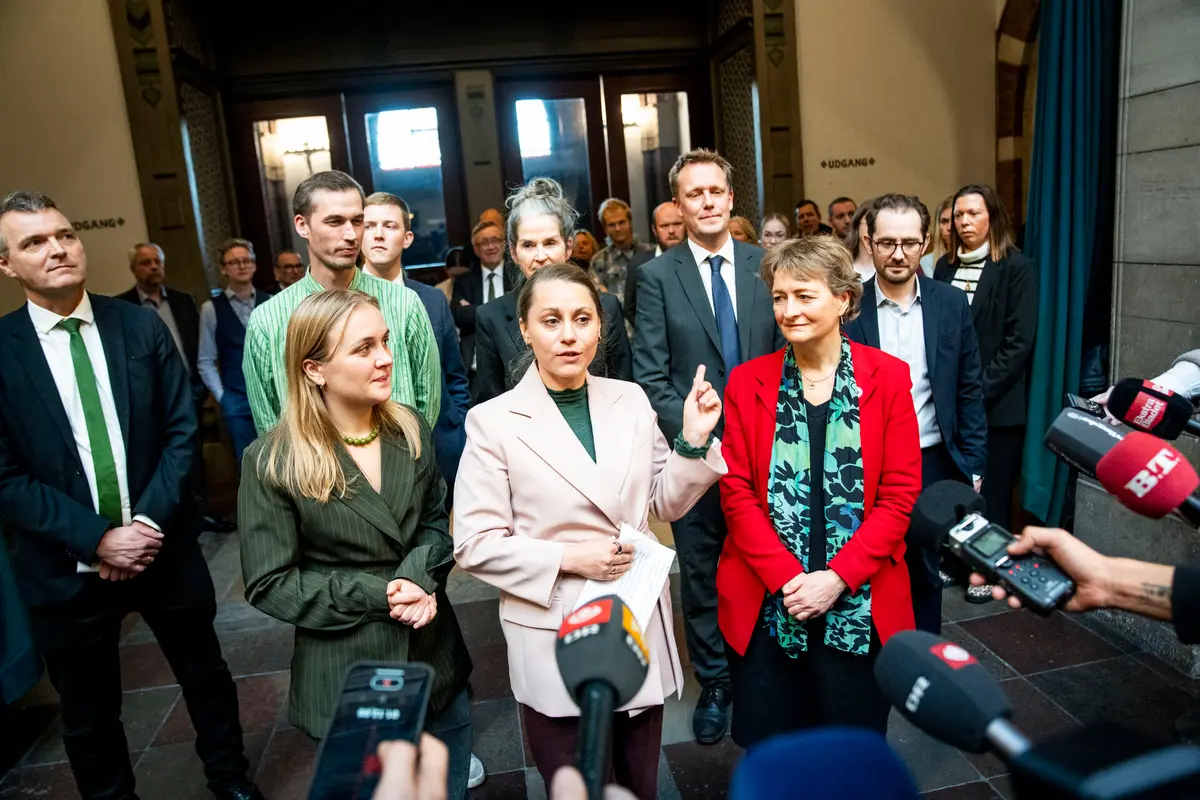
SF's lead candidate Sisse Marie Welling will take over the position of mayor following negotiations with six other parties.
The leftist Red-Green Alliance received the largest vote share in the city for the second successive election, despite a slight fall in support. However, it does not have enough support from other parties to gain control of the city council.
"I think it's very healthy for this city that power doesn't come for granted and that new forces can emerge," Welling said at a briefing at Copenhagen City Hall.
"I'm looking forward to getting on with the work alongside all these good people," she added.
Red-Green Alliance lead candidate Line Barfod said she regretted not becoming mayor but respected the outcome.
"I would naturally liked to have got it," she said at the briefing.
"The Red-Green Alliance lost a few votes. We are still the biggest party in Copenhagen, but we also need a majority behind us. That's crucial in a democracy," she said.
The Social Democrats have controlled Copenhagen for more than a century, and held the position of mayor since it was created in 1938.
The Social Democrats were expected to now control just 26 of Denmark's 98 municipalities, down from the current 44.
Prime Minister and party leader Mette Frederiksen acknowledged her "responsibility" for the election fiasco.
“We expected to lose some support but it looks as if the loss is larger than expected, and that is obviously not good. There could be many explanations,” she said according to news wire Ritzau.
“It’s becoming increasingly hard to be the main Danish people’s party, which is inclusive to all Danes. We will closely consider in the coming days what might be behind this,” she told party supporters.
The Social Democrats are also no longer Denmark’s largest party in terms of local representation, with the centre-right Liberal (Venstre) party having gained more mayor’s seats in the municipal elections.
The Liberals now control 39 of Denmark’s 98 municipalities, up from 34 at the 2021 local elections.
In terms of vote share, the Social Democrats remain the largest party but their 23.2 percent share of the vote is a decline of 5.2 percent since 2021.
This is the second time since the 2022 legislative elections that her party has lost ground in an election.
In the 2024 European elections, the Social Democrats came in second behind the Socialist People's Party.
The Conservative Party has the third-largest number of municipal mayors across the country after Tuesday's vote with 17, while SF now have 4. A handful of parties have single mayors having won the post in an individual local authority.
Some municipalities are yet to determine which party and candidate is to be mayor. After municipal elections, elected councillors go through a process termed konstituering in which localised alliances between parties are decided, putting a candidate in the mayoral seat. This is not always the candidate from the party with the largest vote share, and the alliances can often vary from the ones between parties in parliament.
With additional reporting from AFP.
Comments