
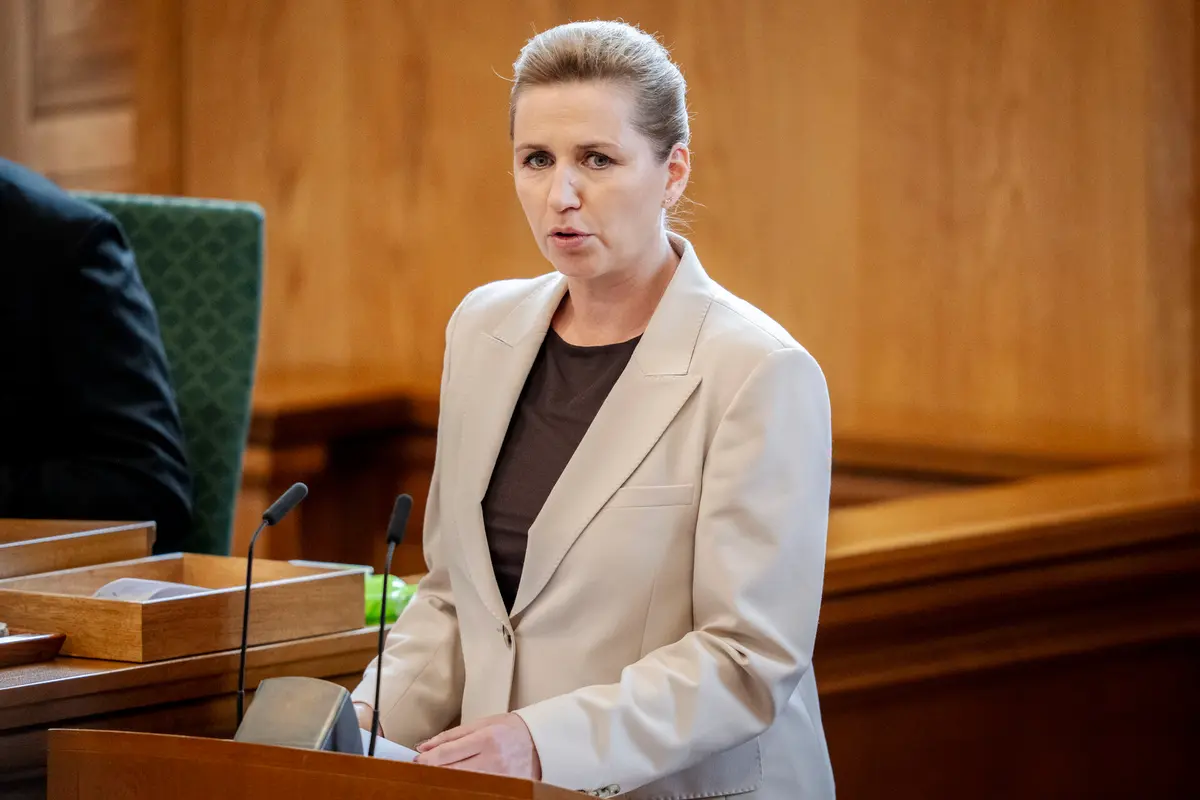
Denmark’s parliament is traditionally opened each year on the first Tuesday in October, with a speech by the prime minister, in which she gives her assessment of the situation in the Scandinavian nation, a key feature of the proceedings.
While there are no predefined expectations as to the content of the speech, the Constitution states that the PM must make her assessment of the state of the kingdom and present some of the government’s initiatives.
Usually, the prime minister gives a speech at which she outlines the government’s strategies and key issues for the incoming parliamentary session, and sums up the previous year.
Issues chosen for the speech are customarily more likely to relate to domestic matters than international policy.
READ ALSO: Why does Denmark reopen parliament at the start of October?
Prime Minister Mette Frederiksen has plenty of experience with the speech – this year’s version is her seventh, having been in office since 2019.
But what topics did she choose to mention in Tuesday’s speech, and what has been the reaction?
The headlining statement from this year’s speech is possibly Frederiksen’s assertion that “several social media platforms” should be banned for children aged 15 and under.
That would be with the condition parents can give permission to their children to access the platforms from the age of 15, she said.
The PM didn’t mince her words saying that “mobile phones and social media are stealing our children’s childhoods.”
She did not give any further specifics such as how a ban would work, when it would take effect or which social media it would apply to.
A political agreement is already in place in Denmark which will see mobile phones and other devices banned at schools.
The government meanwhile wants to increase protections for the families of politicians and others in public office who have received threats, Frederiksen said in her speech.
“It’s problematic enough just being threatened for stating your opinion. But it’s unacceptable when these threats are aimed at people’s children or family,” she said, adding that there have been several incidents of harassment, threats and violence targeting politicians or their families.
That is a democratic problem if it scares people from taking part in public debate, she said.
She also linked this issue back to social media.
“It’s as if the limits have been erased for what is acceptable to say about, and to, each other,” she said.
“We’ve got used to it being like this,” she said in relation to the harsh tone of social media debate.
Cost of living, and specifically high food prices, was a major area skipped over by the PM in her speech, according to left-wing opposition party Red-Green Alliance (Enhedslisten).
The speech contained a lack of solutions to “immediate problems,” according to the party’s political leader Pelle Dragsted.
“The government has, in its wisdom, decided to reduce the cost of sweets, but sweets are not putting strain on people’s finances. Butter, milk, eggs and everything else we use every day are doing this,” he said in reference to plans to reduce tax on sweets among other products.
“So I’d have hoped the Prime Minister would have offered an answer [to this],” he said.
The leader of right-wing opposition party Liberal Alliance, Alex Vanopslagh, said the speech was a good one “in many ways” but called for more tangible results from the government.
“When you’ve been Prime Minister for six years you shouldn’t just be judged on your speeches but also on your actions. I’m less impressed in this sense,” he said according to DR.
“I’m seeing a government that knows what to say and likes to give big press briefings but delivers very little,” he said.
Vanopslagh said he was open to supporting Frederiksen’s plan for limiting social media use among young people.
“The difficult thing about this is whether you can come up with a model where you enforce an age limit effectively, or whether it’s just a symbolic gesture,” he said.
Comments