
What are local elections and who can vote?
If you are a foreign national living in Denmark, you may be able to vote in upcoming regional and local elections on November 18th.
Unlike with parliamentary elections, you do not have to be a Danish citizen to vote in regional elections (regionalvalg) or municipal elections (kommunalvalg) in Denmark.
Denmark has 98 municipalities and 5 regions. The local elections, lokalvalg, elect representatives to both municipal councils and regional boards and take place at the same time. The elections take place every four years.
A municipality or kommune handles local services such as schools, childcare, elderly care, local roads and social services. A region is a larger administrative unit primarily responsible for healthcare, including hospitals, as well as regional development and planning.
READ ALSO: What’s the difference between a municipality and a region in Denmark?
Foreign nationals can be eligible to vote in these elections if they fulfil a number of criteria.
Any person who is legally resident in a Danish municipality can vote in both the municipal and regional elections.
However, people who are citizens of non-EU countries (not including Iceland, Norway and the UK) must have lived in Denmark for at least the last four years prior to the vote.
Citizens of EU countries as well as Iceland, Norway and the UK can vote in the local elections provided they are legally resident in Denmark (regardless of length of stay).
Some 414,966 foreign nationals in Denmark had the right to vote in the 2021 local elections, according to interior ministry figures – a number large enough to make a difference to the result.
So how do I vote?
Voters with a registered Danish address should receive a voting card (valgkort) at least five days before election day. That card should be taken along to your local polling station when you go to vote.
The address of your nearest polling station (valgsted) will be written on your voting card. It will also state the opening times of the polling station on election day – this will be 8am-8pm in most places.
It’s important to note that you have to vote at the polling station you are assigned unless you are unable to get there due to, for example, access problems or a disability, in which case you can apply to your municipality to change location.
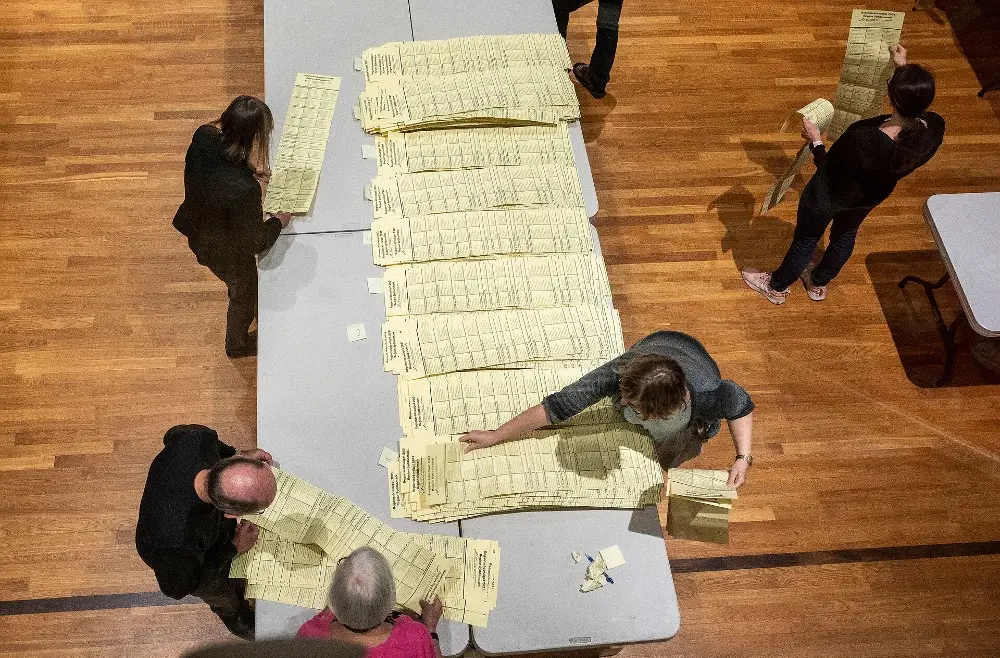
When you present your voting card on arrival at the polling station you will be issued with two ballot papers (stemmesedler), one for each election. You will then be directed to a voting booth. You will be asked for your date of birth so your registration can be checked against the voting list.
If you have not received a voting card or have lost yours, you can be issued with a new one at the polling station if you bring identification – the yellow health insurance card (gule sygesikringsbevis) along with a passport or driving license are the best forms.
Voting takes place within the municipality in which the voter’s address is registered, but Denmark also allows voters to submit their ballots in advance (brevstemme).
Advance votes are given at certain facilities such as municipal service centres (borgerservicecentre) or, in some municipalities, at libraries or mobile advance voting locations. You can find out where these places are via your local municipality’s website.
You’ll need your ID (passport or driving license) to advance vote, but not a voting card.
Advance voting opens on October 7th, exactly six weeks before election day. The latest possible date for advance voting will be November 14th, the Friday before election day.
Voting from abroad
If you are temporarily outside of Denmark on or prior to election day, you can vote at any Danish embassy or consulate. You can also vote from Greenland or the Faroe Islands.
In these situations, contact the relevant embassy or consulate for information.
Unlike advance voting in Denmark, there is no early deadline for submitting postal votes from abroad. But waiting until election day is unfortunately likely to be too late for voting from abroad. Your vote is sent on by post and must reach your home municipality by 8am on election day, so needs to be submitted in plenty of time.
Votes submitted from abroad are already being accepted at Danish representations, so there's no time to lose.
Comments