
Food prices in Denmark have gone up by an incredible 32 percent on average since 2021, according to data from national agency Statistics Denmark.
Five-year data from the Forbrugerindeks or inflation index for consumer goods shows a 31.9 percent increase in food prices in the period 2020-2025.
That compares with 6 percent from 2001-2005; 15.6 percent from 2005-2010; 9.3 percent from 2010-2015 and 5.9 percent from 2015-2020, according to broadcaster DR’s report.
Global factors have been decisive in skyrocketing daily costs, a new review by the country’s central bank, Nationalbanken, has concluded in a new analysis.
“Pressure on the market is caused by insecurity around supplies after the Covid pandemic, the war in Ukraine and trade conflicts,” it wrote.
“At the same time, production has been reduced globally due to extreme weather conditions related to climate change, such as drought and floods,” it also stated.
An increase of food prices of more than 30 percent means they have risen in price at double the rate of general price increases.
The National Bank cites poor weather conditions, the war in Ukraine and transport problems as some of the most important reasons why food has become so much more expensive in Denmark.
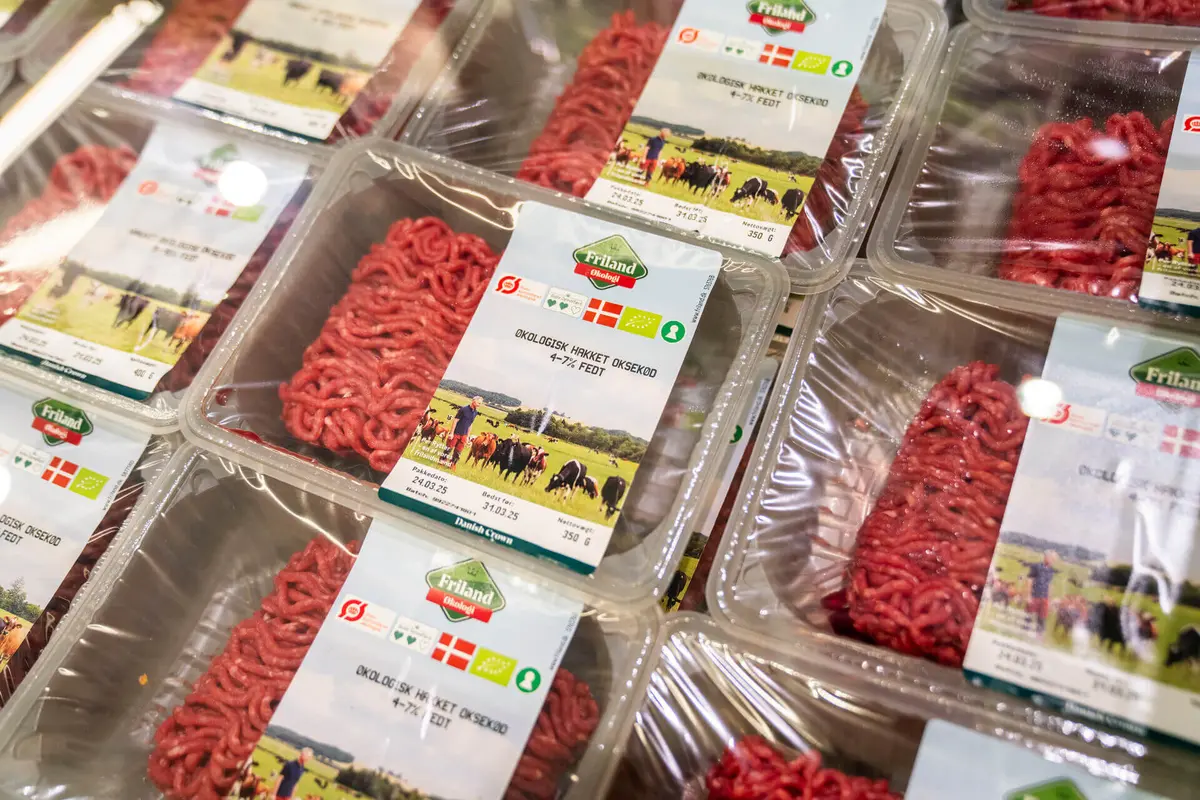
That applies to coffee, chocolate and beef in particular, it said.
“Price trends for food and non-alcoholic drinks are not just a Danish phenomenon, but broadly reflect the same trend in the Euro zone,” it wrote.
Wages have also increased during the last five years but social benefits are lagging behind inflation, according to the report.
That means pensioners, unemployed people and others in low income brackets are more severely impacted by price rises and use a relatively larger proportion of their income on food.
Broken down by item category, the products which have seen the steepest price rises since 2020, according to Statistics Denmark, can be viewed in the table below.
| Rank | Food/Drink Item | Price Increase (July 2020 – July 2025) |
|---|---|---|
| 1 | Coffee | +67.8% |
| 2 | Edible oils (excluding olive oil) | +58.8% |
| 3 | Chocolate | +53% |
| 4 | Cocoa and cocoa powder | +51.6% |
| 5 | Beef and veal | +50.4% |
| 6 | Other dairy products (e.g. cream, crème fraîche, cocoa milk) | +47.1% |
| 7 | Cheese | +47% |
| 8 | Fresh milk | +44% |
| 9 | Fresh fish | +43.1% |
| 10 | Dried and processed vegetables | +42.1% |
The central bank has meanwhile issued a forecast pointing to a more subdued economic outlook.
According to the forecast, GDP is expected to grow by only 2 percent in both 2025 and 2026, and 1.7 percent in 2027.
That marks a sharp downgrade from the March forecast, which projected growth of 3.6 percent in 2025, 2.3 percent in 2026 and 2 percent in 2027.
The significantly weaker outlook reflects several factors, notably lower expectations from the pharmaceutical industry, which has previously helped drive growth.
“We also expect to see a negative effect from higher [US] tariffs, both directly through lower exports to the US and indirectly as a result of weaker growth in our other export markets, which are also being hit by higher tariffs,” Nationalbanken’s governor Christian Kettel Thomsen said in a statement.
Comments