
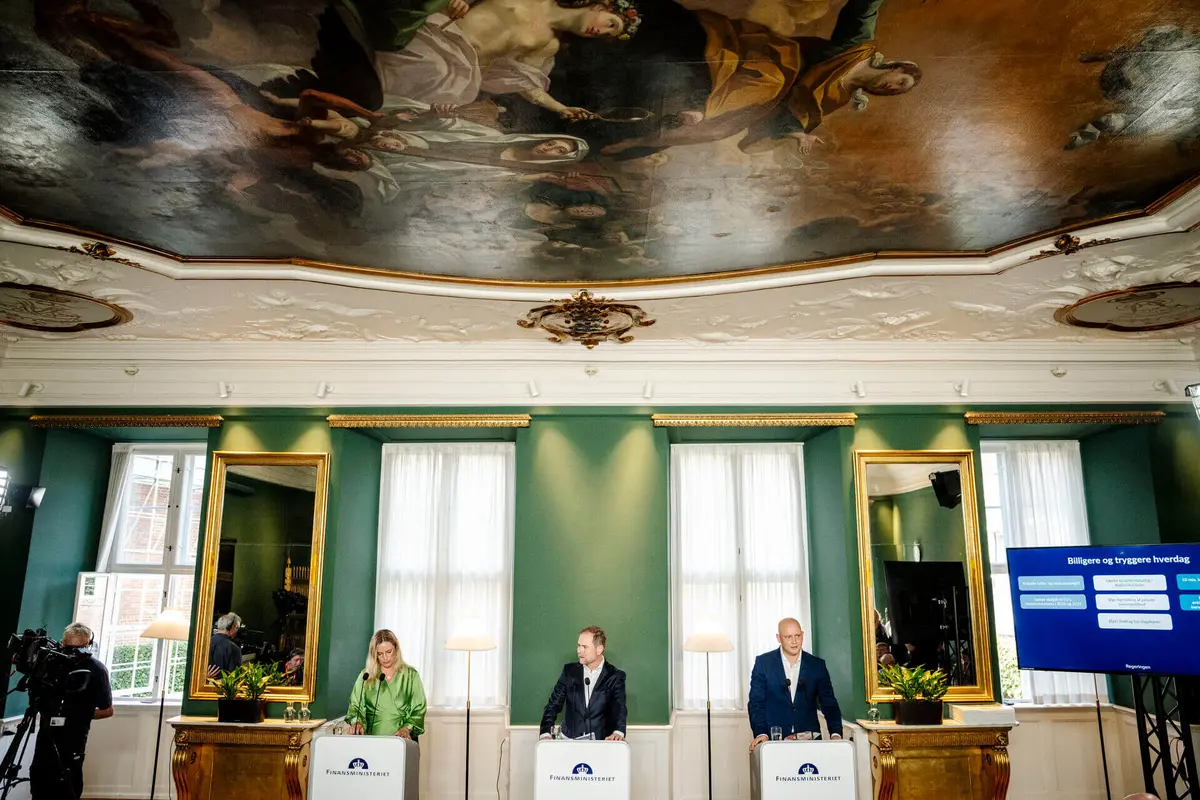
Finance Minister Nicolai Wammen said “all Danes will benefit” as he presented the government’s 2026 budget on Friday.
While it’s common for politicians to refer to the general population of Denmark as “the Danes”, the budget proposal – which includes slashes to tax on electricity, chocolate and coffee – could allow foreign residents, visitors and Danes alike to save on everyday items.
With the 2026 budget proposal coming ahead of local elections in November and with parliamentary elections due by the end of next year, analysts also see the proposed finance law as an early start to the election campaigning by the three coalition parties.
Observers have suggested that the government is therefore loosening its pursestrings more than it might otherwise do, putting aside billions from existing budgetary surpluses, økonomisk råderum in Danish, to cut taxes on electricity and everyday items.
READ ALSO: How much will you save on your Danish electricity bill in 2026?
A large amount will also be set aside to increase staffing at kindergartens and nurseries.
Some 10 billion kroner of increased state spending has also been earmarked for the military as Denmark continues its ongoing military buildup.
Wammen said on Monday that the price of everyday items must be reduced and that many people are now feeling the effects of rising food costs.
“A typical working family with a house will get 8,500 kroner in 2026. That is noticeable,” he told media, citing Finance Ministry calculations.
Denmark budgetary surplus was adjusted upwards by 58 million kroner in June, meaning the state’s cash reserves have now gone up by over 100 billion kroner since the November 2022 election.
Wammen said the surplus was the “result of many years of responsible reforms.”
Economy Minister Stephanie Lose was asked during the presentation why more of the surplus is not being given directly back to taxpayers, who taxes are responsible for building it in the first place.
“It’s true that state revenues are increasing. When the Danish economy is as strong as it is now, we have the chance to give some extraordinary tax cuts to Danes,” Lose said.
“That reflects the fact that the economy allows this. We believe that what we are doing is as far as we can go while remaining economically sensible,” she said.
Several elements of the budget have been reported in advance, including and removal of tax on books as well as a suspension of electricity taxes and cuts on tax for chocolate, sweets and coffee.
The proposed budget presented on Friday includes a number of additional measures aimed at easing living costs.
These include reduced fees at kindergartens and nurseries by reducing the maximum cap on parental contributions for a nursery or kindergarten place from 25 percent to 21.3 percent.
Fees charged to a number of food producers, amounting to 50 million kroner a year, will be removed, giving a saving the government says will be passed on to consumers.
Also of potential interest to foreign residents is an allocation of 68 million kroner to German and French language studies after years in which enrolment on university language programmes has declined.
A so-called “negotiation reserve” (forhandlingsreserve), a pool of money in the budget that can be allocated at a later date based on agreements between parties, is set at 500 million kroner in the proposed budget. Opposition parties are customarily invited to talks with the government to decide on how this money will be spent.
The 500 million kroner sum could change depending on the outcome of those negotiations.
The budget is usually finalised by late autumn and passed by parliament before the end of the year.
Comments