
Of course, the main reason Norway celebrates its constitution in so much grander a style than Denmark does is that it actually is more significant.
Its signing marked the rebirth of a nation after 400 years subsumed in Denmark-Norway, whereas the signing of Denmark's constitution simply spelled a shift from absolute to constitutional monarchy.
But according to Rasmus Glenthøj, Professor at the University of Southern Denmark's Nordic Humanities Centre, there's another reason why Denmark tends to downplay it: the memory of losing a third of the country's territory in the Second Schleswig War against Austria and Prussia in 1864.
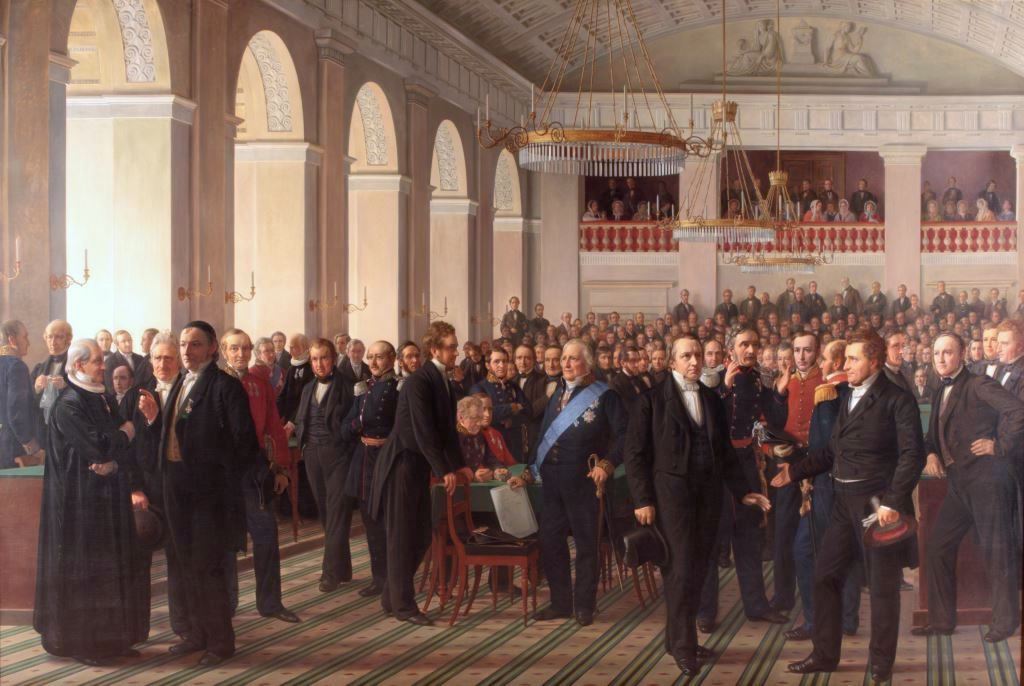
The tainted birth of Denmark's constitution
While the framers of Norway's constitution are "seen as heroes", Glenthøj argues, their Danish counterparts will be forever tarnished by the loss of Holstein, Lauenburg, and Schleswig, which he describes as "a national trauma".
Ditlev Gothard Monrad, who drafted the 1849 constitution went on to lead the country at the time of the defeat as Council President - basically Prime Minister.
Orla Lehmann, who edited it, meanwhile led the diplomatic missions to London and Berlin that failed to resolve the thorny Schleswig–Holstein question and so ward off the looming crisis.
"The Danes don't really celebrate the fathers of the Constitution because they've been given the blame for perhaps the most traumatic defeat in Danish history," Glenthøj says.
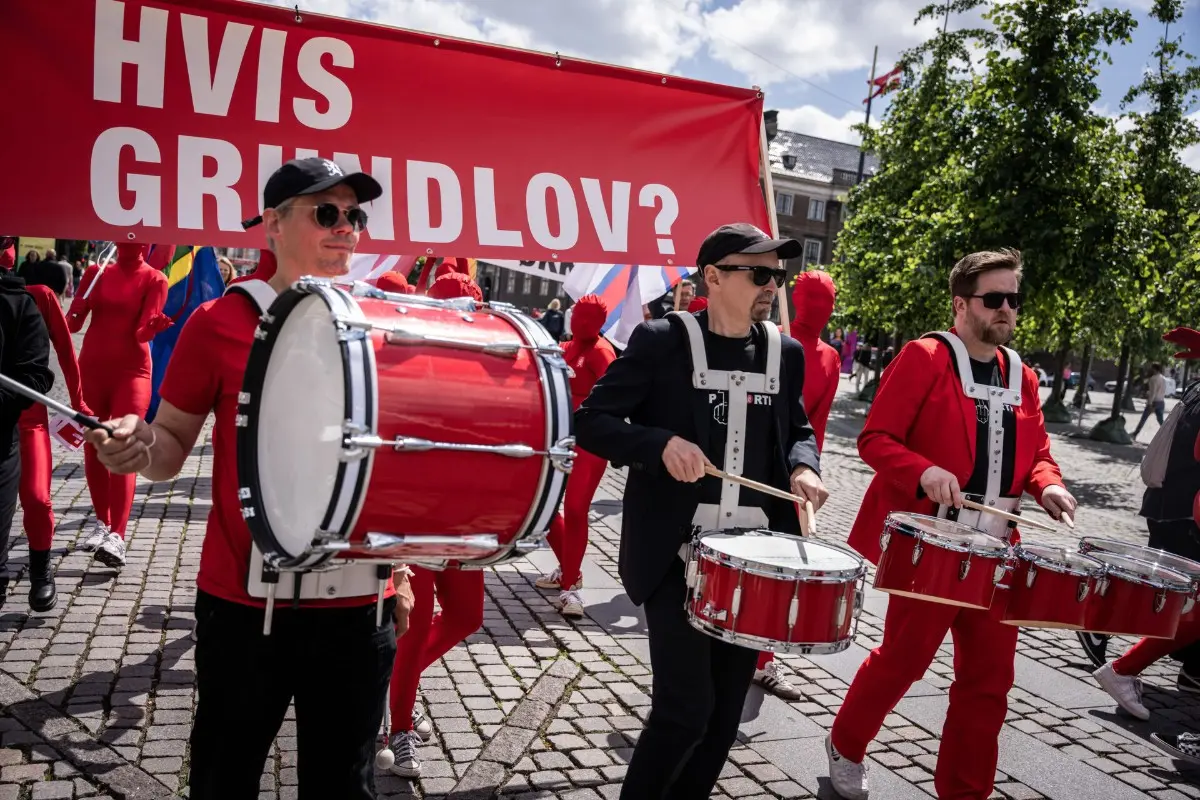
READ ALSO: How is Constitution Day celebrated in Denmark?
 Rasmus Glenthøj, Professor at the University of Southern Denmark's Nordic Humanities Centre. Photo: provided
Norwegian independence
For Norway, there are no similar mixed emotions. The country was ceded from Denmark to Sweden in January 1814, but Norwegians instead celebrate May 17th, the day the constitution was signed five months later after the national assembly at Eidsvoll.
"It's a lot better to celebrate a national day in May than in January, especially when you're living in Norway," Glenthøj jokes.
Even though Norway continued in a loose union with Sweden until 1905, with the Swedes controlling foreign policy, it's 1814 that is celebrated. "If you ask a Norwegian, 'when did you get independence?', they will say 1814."
May 17th was celebrated in Norway as early as the 1820s
Despite, or perhaps because of, Norway's continuing union with Sweden, the country started celebrating May 17th in a big way from the 1820s onwards.
"They wanted to assert themselves. Within the first 10 to 15 years there very much a fear within Norway of amalgamation, that they would be swallowed up and turned into Swedes, and they did not want that."
The May 17th celebrations initially "mirrored celebrations in revolutionary France", he continues, with "massive effigies" of "trees of freedom" and "statues of liberty", together with images of Thor and Odin and "a lot of cannons".
Denmark's celebrations used to be bigger
Despite the taint of losing Schleswig, Denmark's Constitution Day celebrations were significantly more energetic in the second half of the 19th century,.
"It was a big day because it was political. There was a real risk of Denmark returning to absolutism, so they invented a tradition to make sure that you would not go back to that system. You would fight for the Constitution," Glenthøj explains.
Then from the 1870s to the 1890s, politicians on the left and right used the day to demonstrate over how they thought the constitution should be interpreted.
"Back then, it was really a big thing, but there's no struggle nowadays about how you should understand the Constitution."
Comments