
Denmark's parliament last month voted through a 50 percent hike in the fee for citizenship, meaning the cost of an application is now 6,000 kroner.
For most people who wish to obtain Danish citizenship, it is a requirement that you must have lived in Denmark continuously for 9 years.
There are exceptions to this. For example, if you are living in Denmark with refugee status, the required period of continuous residence is 8 years. The demands are also reduced if you are a Nordic citizen, whereby you must live in Denmark for 2 continuous years before applying for citizenship.
Different rules also apply for spouses of Danish citizens, and for those who entered Denmark before they were 15 years old.
But what about the waiting time once you fulfil the criteria? In other words, how long does it take to become a Danish citizen after you submit your application?
To be granted citizenship, you must apply to the Ministry of Immigration and Integration for the eye-watering fee of 6,000 kroner, as of May 1st 2025.
Citizenship entitles you to a Danish passport and gives you the right to vote in parliamentary elections, as well as providing a permanent basis for residency in the country.
You must meet a number of closely-defined criteria and requirements in order to be eligible for citizenship by naturalisation.
These fall into seven broad categories: declaration of loyalty to Denmark, including attending a citizenship ceremony; length of prior residency in Denmark; no debt to the public sector and financial self-sufficiency; no criminal convictions; employment history; Danish language proficiency; and passing a Danish citizenship test.
READ ALSO: How to apply for citizenship in Denmark
Applications for citizenship are made via the borger.dk citizens’ self-service website, where you must initially log-in using the MitID digital ID.
You will then be guided through each step of the application and prompted to upload documentation. Applications can be saved in the system for up to a month. After this, you’ll have to begin from scratch.
After you have submitted your application and paid the fee, you will receive an email from the Ministry of Immigration and Integration within one month.
This email, which is sent to your e-Boks secure digital mailbox – which also requires MitID to access – will include a confirmation that your application has been received and is being processed. It will also state the current projected processing time for the application.
According to the receipt received by the writer of this article, sent by the ministry on May 5th in response to his own application for citizenship, the processing time is currently 24 months.
If your application is rejected, you can apply again, resetting the process. It should be noted that another rule change effective from May 1st means that you do not have to pay to re-apply the first time – but must pay the full 6,000 kroner fee if your reapplication is also rejected and you then reapply a second time.
Once your application is successful, the waiting is not yet over.
Danish citizenship can only be granted to foreign nationals via legal nationalisation: your application must actually be approved by a parliamentary majority.
This means that the government tables a bill including the names of all people whose application for citizenship have been found to meet the criteria for naturalisation.
These bills are voted on in parliament twice yearly, in April and in October.
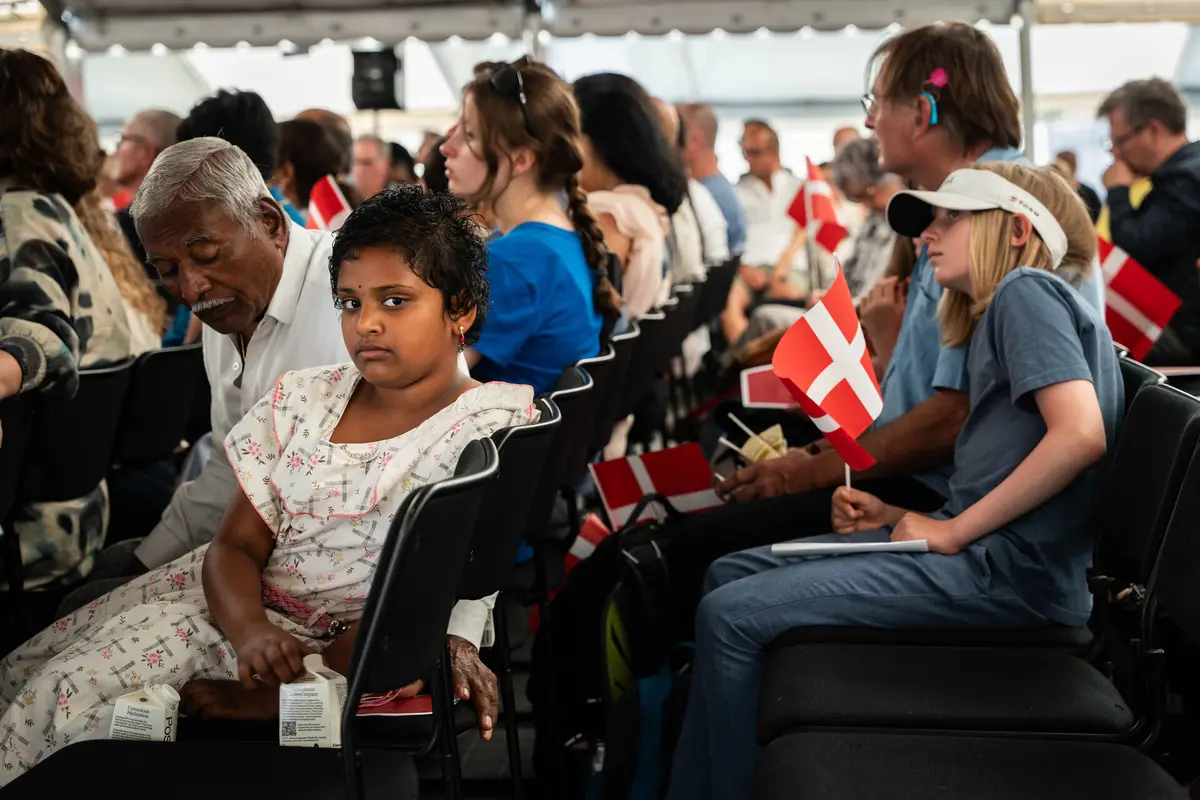
Following adoption of the bill in parliament – which can, theoretically, be up to six months after you are informed you meet the criteria – you must then attend a citizenship ceremony, usually arranged by your local municipality.
At this ceremony, you shake hands with an official and, finally, you are a Danish citizen, can vote in elections and obtain a Danish passport.
Comments