
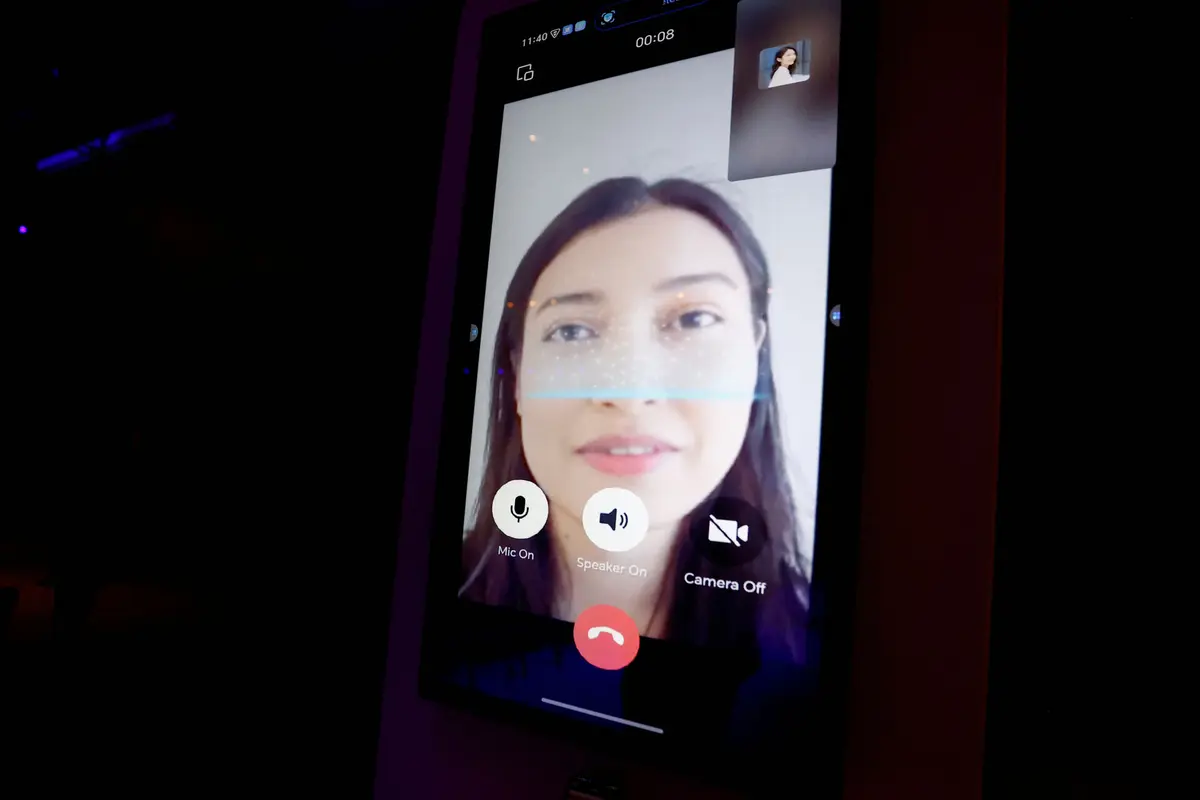
Allowing deepfake content to be spread online should be illegal, Denmark’s government said on Thursday as it announced plans to legislate against the content form.
Citing deepfake’s ability to damage democracy, public discourse and individual identities, Culture Minister Jakob Engel-Schmidt said existing laws do not enable content of this type to be prevented, and that new legislation must therefore be introduced.
The government plans to amend copyright laws “to introduce a provision giving you rights over your own body, voice, facial features and images,” Engel-Schmidt told the Ritzau newswire.
Deepfake content is synthetic media that uses artificial intelligence to convincingly manipulate or fabricate someone’s appearance or voice to make them seem to say or do something they never did. It can take the form of audio and images as well as video.
Negotiations will take place with other parties with the objective of banning the publication of manipulated content like deepfakes and other AI-generated content that depicts people without their permission.
That means a modernisation of existing copyright laws that accounts for the modern invention of false videos like deepfakes.
Engel-Schmidt gave the example of a video of the prime minister announcing Denmark’s withdrawal from NATO the type of false content that can potentially be created.
“Legislation here is first and foremost about protecting democracy and ensuring that it’s not possible to spread deepfake videos where people say things they’d never dream of saying in reality,” he said.
The new legislation would also offer better protection to members of the public.
Specifically, the Danish proposal will follow EU framework and allow Denmark to order tech companies to delete deepfake content.
“If an individual finds out that someone has made a deepfake video of them without permission, the law will ensure that the tech giants must take it down again,” Engel-Schmidt said.
Satirical use of deepfake and AI will remain legal provided it is clearly marked as such, the minister also said.
In cases where there is a dispute, this would be a “question for the courts”, he said.
Engel-Schmidt also denied the law would be an infringement of free speech.
“This is to protect public discourse,” he said adding that identity theft has always been illegal.
Comments