
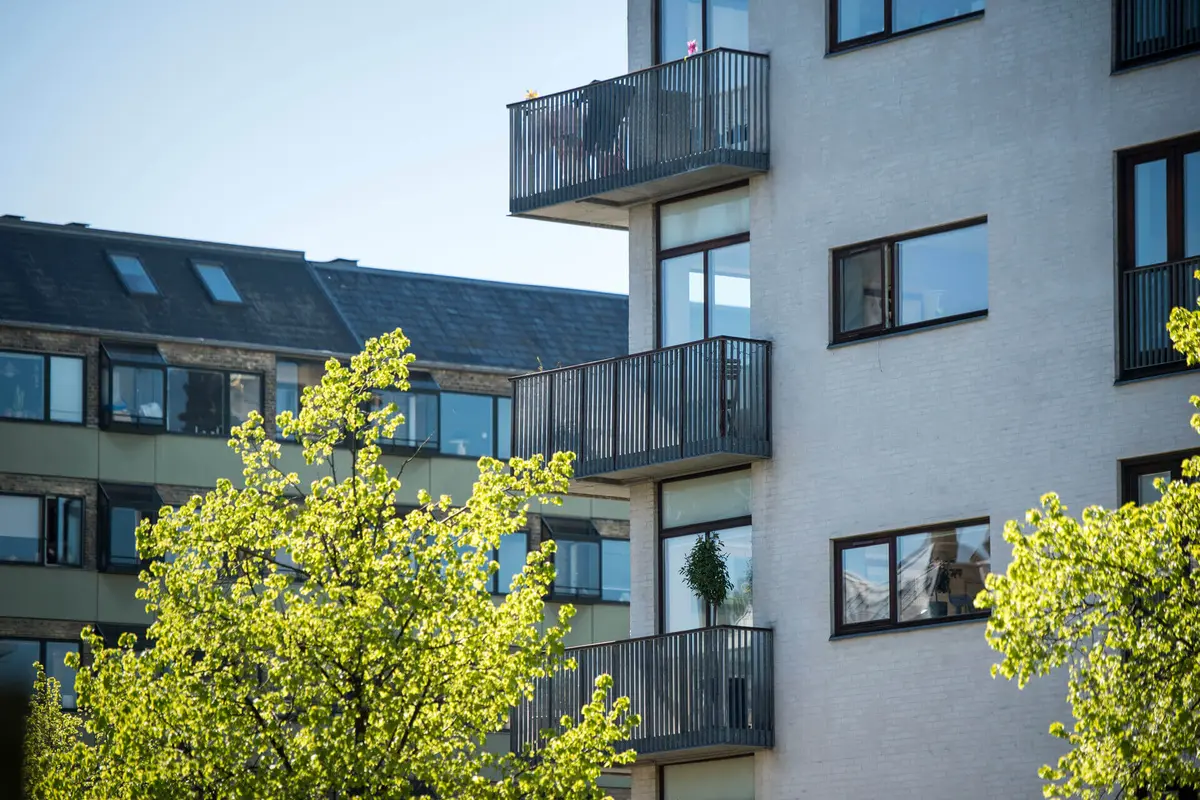
Denmark has colder temperatures and a shorter growing season than some other countries, but there are still a lot of different plants which thrive during the summer, in part due to the long days with lots of sunlight hours.
Most plants can be grown in containers, although it’s probably smart to stick to plants which don’t need a huge amount of space, unless you have an unusually large balcony. Let’s look at an idea first which can fit on even the smallest of balconies.
Herbs
This may seem obvious, but herbs are a great idea for a balcony garden, especially if you’re just starting out and don’t want to invest in a lot of special equipment.
Most of them will do well in small pots or planters you can hang from the balcony rail, and it’s very useful having them easily accessible close to the kitchen. It’s also easy to get hold of them without having to visit a garden centre, as you can often buy them as plants in the supermarket.
There are a lot of herbs which can survive the winter in Denmark and come back year after year – especially woody herbs like thyme, rosemary, sage and tarragon, but even more tender herbs like parsley, chives, or coriander can survive frost temperatures (although it depends on how cold it gets where you live and how lucky you get).
If you want to grow basil or dill, you’ll have to either sow your own seeds in the spring or plant out larger plants after the risk of frost has passed.
If you buy pots of herbs from the supermarket, they are often multiple smaller plants all crammed into one pot, so it can be a good idea to split them up before you plant them out so they’re not competing for space.
Salad greens
Leaves like spinach, rocket and some types of lettuce also do well on balconies, as they don’t need a lot of soil to grow. Look for "cut and come again" varieties, where you harvest individual leaves throughout the season rather than the whole plant.
Some plants, like lettuce, will bolt (start flowering) in the summer months or if they don’t get enough water, so you may need to swap these out with other varieties which don’t mind the longer days.
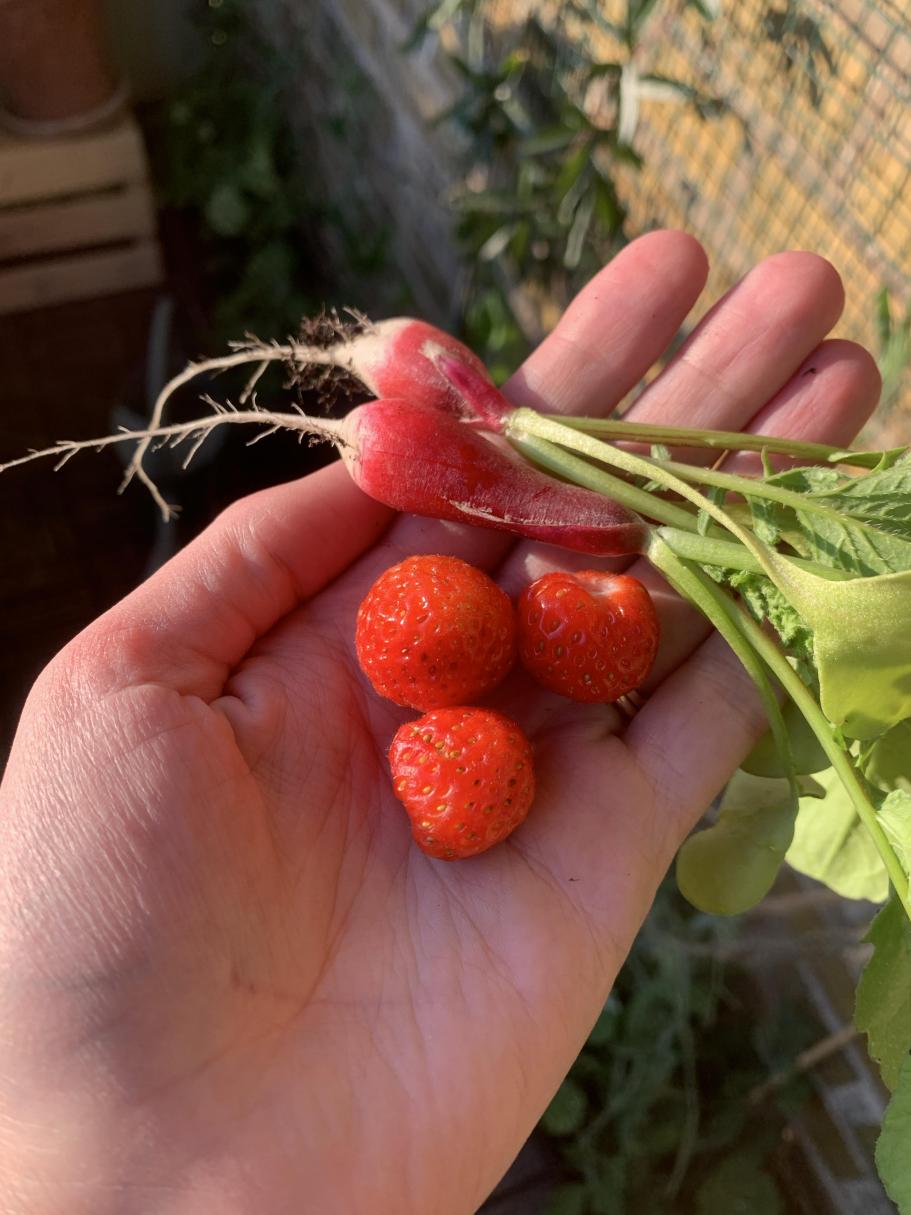
They’re not really a salad green, but radishes are also a fun balcony crop, especially if you have children who want to see quick results, as they only take a few weeks to mature. Again, they don’t really like the long summer days, so it’s best to grow them in spring and autumn, taking a break over the summer.
Larger veg
If you want more of a challenge, why not try growing tomatoes or even cucumbers on your balcony? Neither of these plants can handle temperatures below freezing (and won’t do well if it’s too cold), so you’ll need to either grow them from seed inside for planting out later, or buy so-called "plug plants", larger pre-grown plants, from a garden centre.
For tomatoes, look for determinate varieties. This means they stop growing at a certain point instead of continuing to grow like a vine. In Danish, they’ll be helpfully described as busktomat or literally, “bush tomato” – a type of tomato plant that grows as a compact, bushy shrub. You should be able to find plants in supermarkets or florists during the spring.
If you want to grow a more unusual variety, look at growing from seed. You should sow them around six to eight weeks before the last frost date in your area, so you’ve probably still got time to grow them for the 2025 growing season.
On the topic of last frost dates, it can also be useful to know your growing zone, as this will affect the types of plants or flowers you can grow.
Flowers
Whether you’re planning on growing your own veg or not, it can be a good idea to grow flowers on your balcony too. They look nice, of course, but they also have the benefit of attracting pollinators, which is good news for any veg you’re trying to grow.
You can also use them for added privacy, growing climbing plants on a trellis as a sort of wall between you and your neighbours.
There are a number of good climbing flowers that work on balconies, although they will all need some kind of net or trellis to climb up.
You could try nasturtiums, which have the brilliant Danish name slyngende tallerkensmækker, literally ‘twining plate smacker’. Avoid the bush type, as these will grow more compact. This plant has the benefit of being edible – the leaves taste peppery, similar to wasabi.
Sweet peas (duftært) also work. You can pre-sow them inside before planting them out if you want to give them a head start. In milder areas you can also just plant the seeds directly in the ground a bit later. Once they flower, make sure to snip the flowers off regularly as this will encourage the plant to grow more.
Other options included the oddly-named black-eyed Susan, known as søjleblomst or thunbergia in Danish, which got their name due to their dark black centres, as well as rød bønne or løberbønne, a type of runner bean which is often grown for its flowers, although you can also eat the pods.
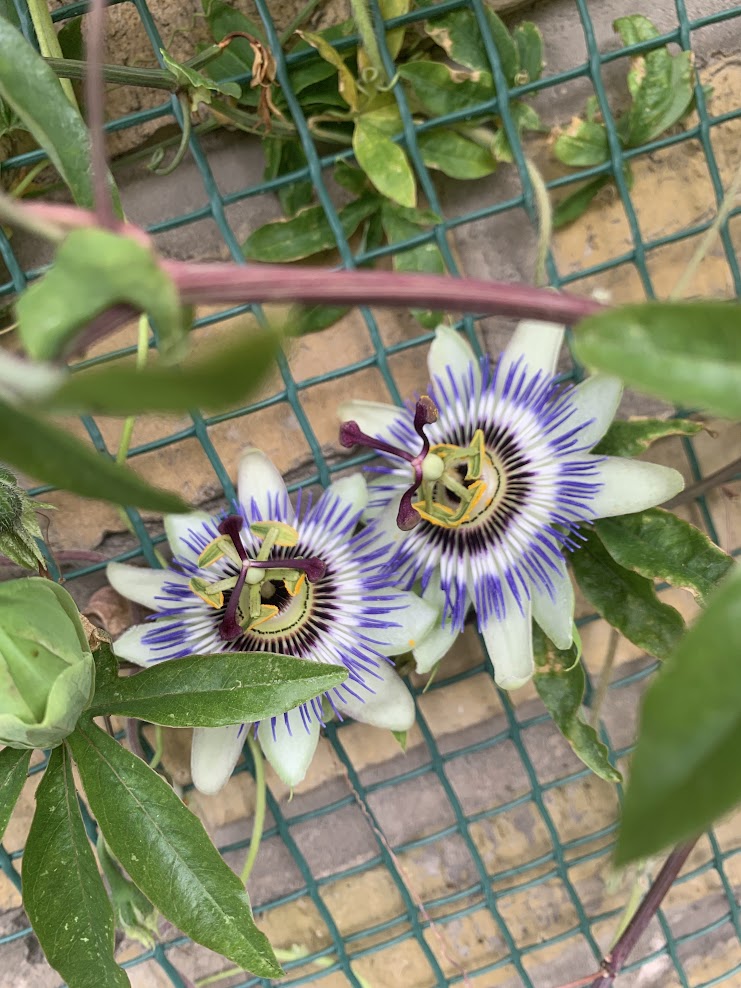
If you want perennials instead (plants which will survive the winter and come back next year), you’ll usually need a larger pot. Climbing options include clematis or even some types of passionflower. For non-climbing options, you could plant something like lavender or kærlighedsurt, known as orpine in English.
Fruits and berries
This definitely falls into the more challenging category, but it is also possible to grow berries or fruits on a balcony. Strawberries and vildjordbær (wild strawberries) are both good options as they’re quite small, but you could also grow smaller varieties of blueberries or raspberries, although they’ll need larger containers. Try asking in your local garden centre for advice.
If you grow blueberries, make sure you put them in soil with a low pH, otherwise they might not survive. This is often marketed as blueberry or rhododendron soil.
You could also try small blackcurrant, redcurrant or gooseberry bushes.
General tips
When growing in containers on a balcony, be aware that your plants will probably dry out faster than they would in the ground, so you’ll need to water them more often.
You’ll also need to fertilise them, especially if you’re growing in old soil from last season, as they don’t have access to as many nutrients as they would if they weren’t in pots.
Finally, you can learn a lot by just trying something out. Most plants will survive in pots, they might just not grow as large or produce as much fruit or flowers as they would otherwise.
Comments