
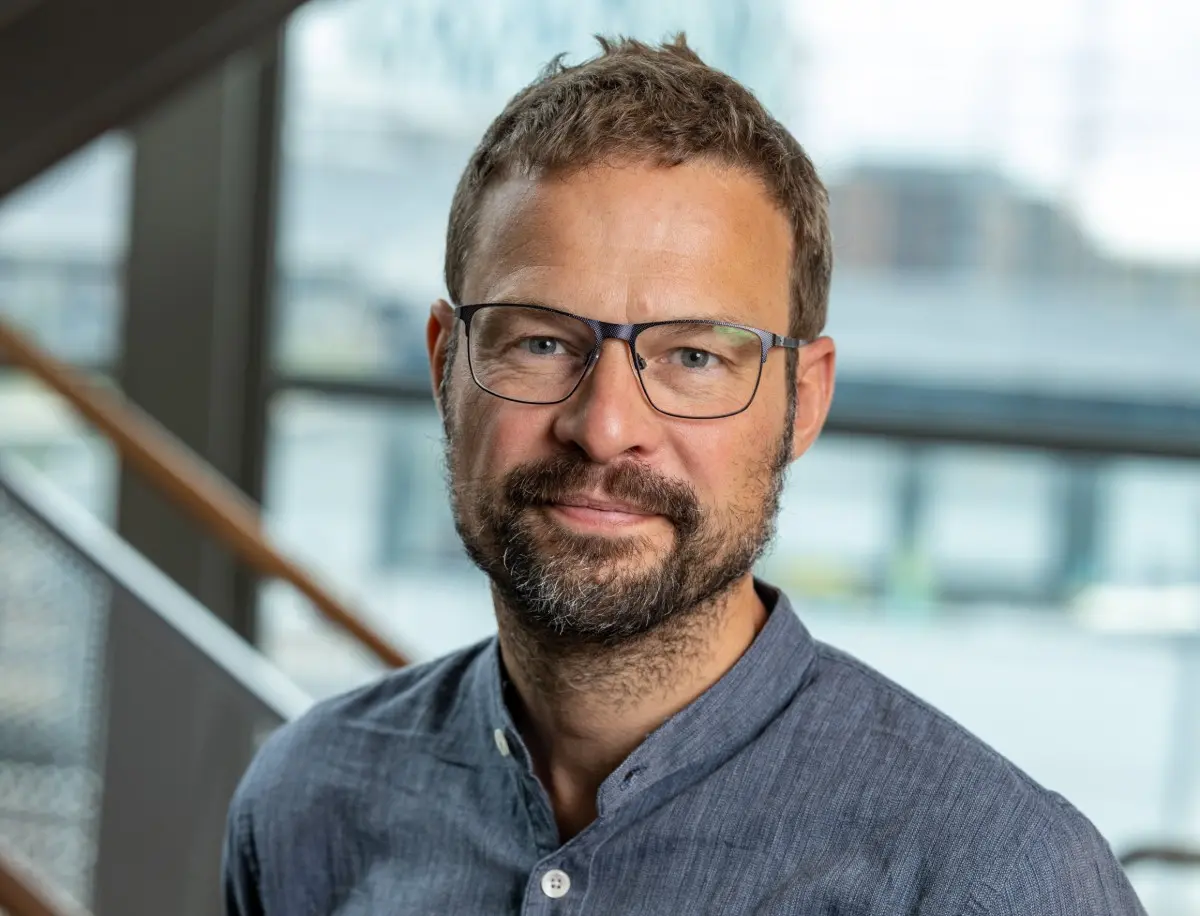
US president-elect Donald Trump on Tuesday refused to rule out using military coercion to compel Denmark to cede Greenland. That has left diplomats and politicians in Nuuk, Copenhagen, and beyond struggling to work out how to react, Gad, who spent four years working for the Government of Greenland, told The Local.
"It's not just people in Greenland but in all the allied capitals who are wondering at the moment whether this is how it's going to be for the next four years -- that Trump is going to tweet or say something, and then we all have to run around for days trying to figure out whether it's just pandering to the base or a serious threat," he said.
The Greenland expert said that it was unclear why Trump has become fixated on Greenland, and played down the idea that Denmark's Prime Minister Mette Frederiksen had brought the problem on herself by describing the debate over his proposal to buy the island as "absurd" back in 2019.
"Obviously he either holds a grudge or he found out that this idea of buying Greenland is kind of memeable in relation to his man cave audience, to whom, you know, women and land are just something you grab," he said.
The problem for Denmark, he argued, is that there is very little extra that it can give the US in regard to Greenland, as the US already has so much power over the island.
"The trouble for the Danish authorities is that everything the US could rationally want, they have already got," he explained. "They have the Thule radar. They have a monopoly on any serious infrastructure and military equipment, so they can keep China out of Greenland. If they want something more, they have it for free, in the sense that the Danes keep the Greenlandic welfare state running, and the US is free to do what they want militarily. So what more could he want?"
The US's military dominance over the island goes back to 1941, the early years of the Second World War, when the Danish ambassador to the US, acting independently due to the German occupation of Denmark, struck a deal to allow US troops to enter the island turning it into a de facto US protectorate.
"The problem is that Denmark essentially rolled over in 1941 and gave the US military sovereignty over Greenland because they need it for their war efforts, and it's been like that ever since," Gad continued. "American companies have all the possibilities they want to go to Greenland and mine. The Greenlanders welcome that, but no investments have appeared. So it's really difficult to find out what to give him, maybe a statue in Nuuk or something."
EXPLAINER: Why is Greenland a part of the Danish Kingdom?
While Trump's statements on Greenland should probably not be taken literally, they are likely to have some effect on elections to be held in Greenland on April 6th to elect the 31 members of the Inatsisartut, Greenland's parliament.
"The electoral campaign beginning in Greenland right now will be more specific on what it is that Greenlandic politicians think about when they talk about independence. What kind of relations do we want with Denmark and the US? What kind of subsidies, what kind of citizen rights do we need on the other side of independence?"
This in turn, he said, would give the Danish government in Copenhagen some specific proposals from the Greenlandic side to react to, which might lead to some formal progress on Greenlandic independence.
Another possible consequence of Trump's rhetoric on Greenland might be a strengthening of Denmark's military presence on the island, something that was already on the way with new funding, amounting to a "double digit billion amount" in krone, announced last month by Denmark's Defence Minister Troels Lund Poulsen.
"There might be added military investments from the Danish side, with the Danes picking up some of the price of enhancing US domain awareness over the eastern coast of Greenland, both in air and submarine. But it's difficult to know what it is that Trump really wants."
The decisions of France, Germany and the EU to come forward on Wednesday with careful criticism of Trump's statements would, Gad said, be welcomed from the Danish and Greenlandic side.
"There is no question of the EU letting other nations in the world, whoever they may be... attack its sovereign borders," French Foreign Minister Jean-Noel Barrot told France Inter radio. "We are a strong continent. We need to strengthen ourselves more," he added.
In Berlin, German government spokesman Steffen Hebestreit said in response to Trump's remarks that "as always, the firm principle applies... that borders must not be moved by force".
Finally, a European Commission spokesperson told a press conference on Wednesday that the remarks were "fairly wild hypothetical stuff about an administration that hasn't come in yet," with another spokesperson adding that the sovereignty of states had to be respected "as a matter of principle".
"It's necessary at some point for the rest of the allies to at least insist that they are allies, rather than in conflict. Because otherwise there is really no Western alliance," Gad said.
"If Trump can pick one country out every month to threaten for weird concessions or just to bully, that would be a terrible way to try to manage international relations for the next four years. So it's nice that that other European powers see that this is not just a Danish thing, it's a way of running an alliance that just won't work for the next four years if it continues like this."
Comments