
Donald Trump Jr, son of the former and incoming US president, visited the Arctic territory on Tuesday. That coincided with intensified rhetoric over a US takeover in Greenland from president-elect Donald Trump, who returns to power in the White House on January 20th.
READ ALSO: Trump intensifies Greenland rhetoric and announces son's visit
In a New Year speech given on January 1st, Greenland's premier Múte Egede said it was time for “the next step for our country”.
Egede has previously stated that Greenland is not for sale, effectively counting out the unlikely scenario of Denmark agreeing to a trade.
Greenland, the world's largest island, is an autonomous part of the Kingdom of Denmark and has a population of around 56,000.
It has its own parliament and administration, currently led by Egede.
Two members of the Danish parliament are meanwhile elected in Greenland. The two Greenlandic lawmakers in Copenhagen are currently Aaja Chemnitz and Aki-Matilda Høegh-Dam. Chemnitz is a vocal opponent of the concept of Greenland becoming part of the US.
What are the terms of Greenland’s autonomy?
Greenland’s autonomous status makes it one of three components of the Danish Kingdom alongside Denmark and the Faroe Islands.
A 2009 law adopted in Denmark recognised the Greenlandic people as a nation under international law and gave them the right to autonomous rule.
That gave Greenland control over its legislative and administrative authorities covering the majority of domestic areas, including business tax, mining rights, aviation, family law, immigration law and border control.
Greenland has full administrative control over its schools, elderly care and infrastructure.
Importantly, the 2009 law also gave Greenland the right to choose to become fully independent at any time. Under the law, Denmark would be obliged to negotiate independence with the Greenlandic government, provided the population of Greenland wanted this to happen.
However, Greenland does not have its own currency, constitution, citizenship or supreme court. It shares Copenhagen’s foreign policy, security and defence as well as monetary policy.
This means that Greenland cannot make agreements with other countries on, for example, security or defence issues without Denmark’s approval.
Legally, Denmark can make a theoretical final decision on whether to transfer control of Greenland to another country, provided Greenland is still part of the Danish kingdom under the 2009 law.
In practice, though, Denmark would not negotiate over a transfer or sale of Greenland without heavy involvement from Greenland’s government, according to senior researcher Ulrik Pram Gad of the Danish Institute for International Studies (DIIS), who gave his assessment of the situation to the Ritzau newswire.
What about US presence in Greenland?
While Trump has talked about “control” of Greenland being crucial for security in the area, the US already has a high degree of presence in the territory due to a a 1951 defence agreement between the US and Denmark that gave the United States the right to military presence in Greenland.
The agreement allows the US wide-ranging access to the Arctic territory and also obliges the US and Nato to help Denmark in the defence of Greenland if required.
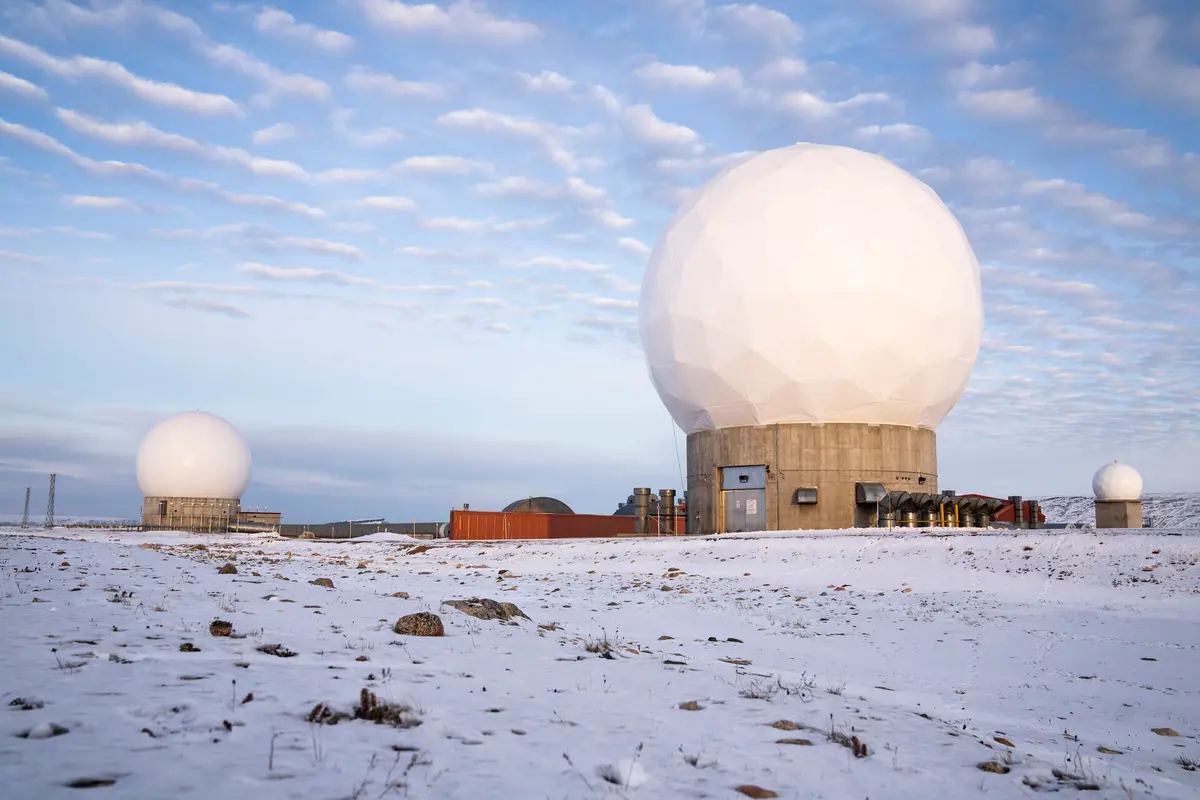
Currently, the United States military has a base at Pittufik Space Base, also known as Thulebasen. Washington can increase its presence here without asking Denmark or Greenland for permission, but has previously made a commitment to inform and consult both Denmark and Greenland ahead of any plans to make major changes.
Sources: Danish Foreign Ministry, Danish Prime Minister’s office via Ritzau
Comments