
Prime Minister’s chilling view of a bleak future
Prime Minister Mette Frederiksen this week gave interviews to Denmark’s four biggest newspapers in which she painted an image of a bleak future in which Danes should prepare for the increased cost of defence spending.
Frederiksen recently put a positive spin on the re-election of Donald Trump as US President, but took a different tone in the interviews, in which Trump’s return to power was one of several themes related to international security.
In the interviews, given to Politiken, Jyllands-Posten, Berlingske and Kristeligt Dagblad, she warned of the need for Denmark and other Western countries to arm themselves – literally and figuratively – against “dark forces”.
“These dark forces have united in a way which represents a new situation,” she told Politiken.
“That’s why democracies are in a much more dangerous position than they’ve been before in our lifetimes. The only way through is to fight for it,” she said.
In similarly combative language to Jyllands-Posten, she named Russia, North Korea and Iran as the “dark forces” in question, and also pointed the blame at China, which has not condemned Russia’s war in Ukraine, as an enabler.
“In the world we’re looking at now, you can win or you can lose. If you don’t have the will to win, you’ll lose,” she said.
“I think Danes already know the bill for this will be high and that we as a country need to accept this task,” she told Berlingske.
Denmark has already significantly increased its defence budget in recent years, but the comments appear a clear signal that more spending is to come in this area.
She meanwhile said Europe cannot return to the way things were before the war in Ukraine.
"You can say that’s unfortunate, but everything I see in Russia's behavior indicates the opposite. So I do not subscribe to the notion that a peace agreement, almost regardless of what it might require Ukraine to do, would lead to a more peaceful situation concerning Russia," she told Kristeligt Dagblad.
With Trump likely to draw down on US support for Ukraine, Frederiksen’s interviews may suggest she wants European countries, including Denmark, to pick up the slack.
Denmark has been among Ukraine’s most prominent supporters since the Russian invasion, and Frederiksen does not appear to have changed her own resolve to support Kyiv.
Famous actor wants Watson released
Paul Watson, the Canadian anti-whaling activist who has been in jail in Greenland since July, is almost a regular feature of this column.
His case has become drawn out as Denmark decides whether to agree to a Japanese extradition request. Watson’s lawyers say Japan’s case against him is spurious and opinion in Europe – particularly France, where Watson has a strong connection – is set against extradition.
Denmark appears to be in a lose-lose situation but a decision is looming close, according to reports after the most recent extension of Watson’s detention in Nuuk earlier this month.
READ ALSO: Anti-whaling activist held in Greenland asks France for political asylum
It’s unlikely, then, that the intervention of a US film personality is what Copenhagen would have hoped for, but that’s what it got this week when The West Wing actor Martin Sheen urged Danish authorities to let Watson go.
In a video posted on Watson’s YouTube and TikTok accounts, Sheen asks Justice Minister Peter Hummelgaard to “imagine the healing effect on our ailing planet if every nation could produce at least one environmentalist with the courage and commitment of a Paul Watson.”
“Now imagine our planet without the only one,” he adds.
See Sheen’s video message below.
What the muck is fedtemøg?
This week saw the Danish Language Board (Dansk Sprognævn) and DR P1’s radio programme Klog på Sprog announce its annual word of the year.
Previous winners count such illustrious contenders as coronapas, Kyiv and ChatGPT, reflecting the prominence given to current affairs in the Language Board’s choice.
The 2024 Danish word of the year is fedtemøg, a word I can honestly say I’ve never uttered in my life.
So what does it mean?
Literally, fedtemøg translates to "fat muck" or "grease dirt", and roughly means "scum". It has a colloquial and informal subtext and can be used, for example, to describe the kind of dirt and mess your child might come home covered in after a day playing in a muddy kindergarten playground.
It can also more generally describe a sticky, greasy substance like food grease, oil, or other slimy, dirty residues.
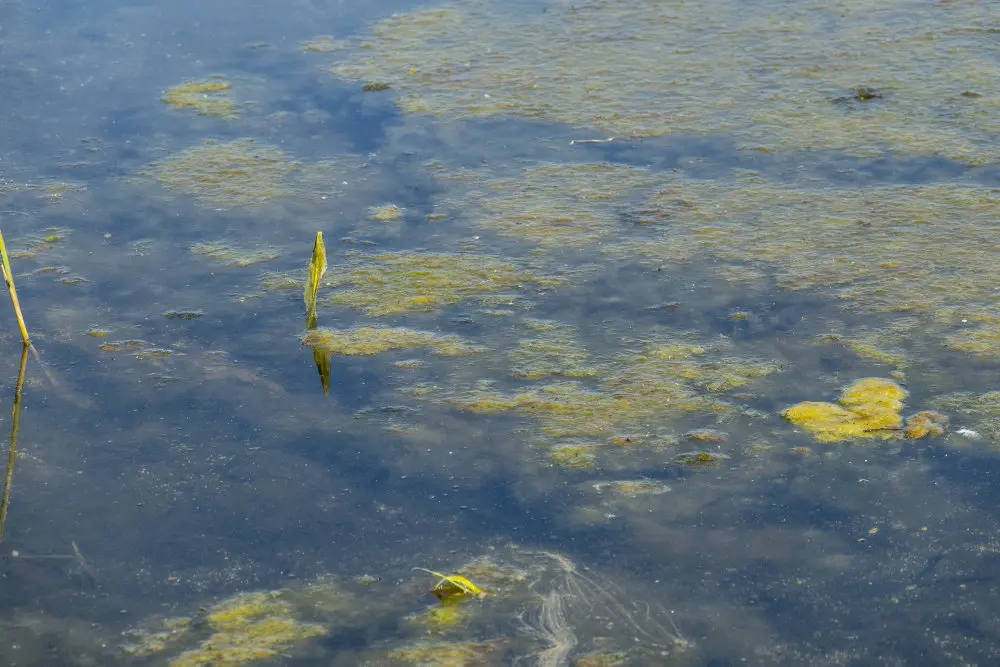
In 2024, it has come to prominence for environmental reasons related to increasing concerns over oxygen depletion in Danish fjords.
Low oxygen levels result in dead fish and other marine life and the appearance of a dirty, oily layer – fedtemøg – on the surfaces of lakes and fjords.
Activists gave Vejle Fjord a “funeral” earlier this year to raise attention to the issue and the Environment Minister Magnus Heunicke announced government initiatives to improve the situation in 20 Danish fjords, where ecosystems are said to be in dire conditions.
"Thirty years ago we could catch fish here. Now there is nothing. The seabed is totally polluted. There is no life," Vejle resident Hugues Dedieu told news agency AFP of the fjord back in April.
Predictions of a dark future which could yet be saved are what we’ve been talking about in Denmark this week.
Comments