
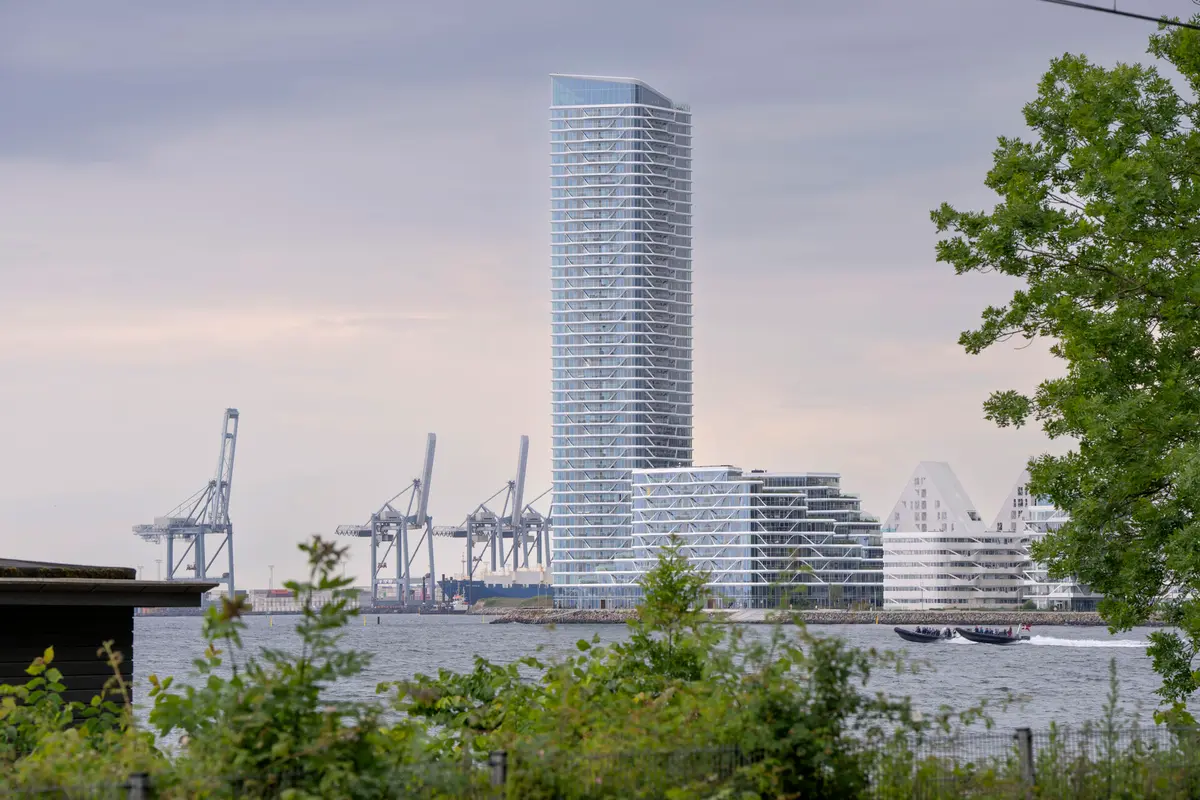
The biggest city in Jutland and second in Denmark as a whole, Aarhus is often the landing point for foreigners moving to the country for a new job, as well as for the many international students at Aarhus University.
The city is home to many international firms and startups, and Denmark’s high wages and good work-life balance make it attractive to workers.
When it comes to wages, figuring out what’s considered a good salary can be difficult, particularly if you are new to the country’s jobs market.
While this article will focus on wages and living costs, it’s important to note that salaries in Denmark are largely set through a bargaining system known as the “Danish labour model”. This means that negotiations between trade unions and employer confederations, which take place in the spring, set wages and other working conditions without political involvement.
This helps to explain why Denmark has such a high rate of trade union membership – traditionally around 70 percent – as well as why there is no legal minimum wage.
READ ALSO:
- Can foreign workers be exploited on the Danish labour market?
- Everything foreigners in Denmark need to know about Danish trade unions
- Working in Denmark: What’s considered a good salary in Copenhagen?
Foreign residents in Denmark tend to have a lower rate of trade union membership compared to Danes but the benefits of joining are the same in either group.
Even if you are not a trade union member, the Danish model means the wage you are offered may be set by a collective bargaining agreement, if one is in place between your employer and a trade union.
How much money do people in Aarhus make?
This obviously depends on a number of factors, such as the sector you work in, your level of education and your costs.
Rent and property prices are both lower than they are in Copenhagen but high compared to elsewhere in Denmark. This impacts how much you have leftover after supporting your family and covering your living expenses, even compared to towns located a short distance from Aarhus.
READ ALSO: Where are Denmark’s cheapest and most expensive places to buy an apartment?
Some things may give you a comparative saving: you are less likely to need to own a car and the public transport system in Aarhus has good coverage since the city’s light rail was introduced at the end of the 2010s. Public transportation in Denmark is relatively inexpensive if you compare it with the cost of other commodities in the country.
According to the national data agency Statistics Denmark, the average annual salary in Denmark was 5.3 percent higher in the second quarter of 2024 compared to a year previously. That is primarily a result of a series of collective bargaining agreements made in 2022 and 2023 in response to inflation, in which wages were set higher in response to rising living costs.
In numbers, the average annual income in 2023 for Denmark as a whole pre-tax was 395,000 kroner (53,000 euros). That figure includes incomes from things like assets and capital. The average income from wages alone was 255,900 kroner (34,000 euros).
Once the data is broken down into socioeconomic status, the potential for high earnings in Denmark becomes clearer. The average annual income of a Danish student is 80,867 kroner (10,800 euros), for a junior-level employee it is 408,854 kroner (54,800 euros), medium-level employees get 504,648 kroner on average (67,600 euros) and senior employees earn 618,989 kroner (83,000 euros). The average income for an executive according to Statistics Denmark is 1,072,770 kroner (144,000 euros). All figures are based on 2023 levels.
Is there a difference in pay between Aarhus and the rest of Denmark? The Statistics Denmark data bank can give some insight into this question because it can be used to rank each of Denmark’s municipalities by the monthly wage earned by people who work in those municipalities.
The data shows that, in 2022, workplaces in Aarhus paid the 19th highest salaries of all 98 municipalities in Denmark, with an average of 47,221 kroner per month (6,300 euros). In comparison, in Copenhagen it is 51,941 kroner (7,000 euros).
This perhaps places Aarhus among the higher payers but not right at the top end.
It’s worth noting, however, that a large proportion of the 18 municipalities above Aarhus are in the Greater Copenhagen area, including all of the top six. Almost all are within commuting distance of central Copenhagen, and only one municipality in Jutland, Billund, has a higher average wage than Aarhus.
Billund is home of the headquarters of Lego, one of Denmark’s biggest companies and international employers. The four municipalities which border Aarhus – Skanderborg, Odder, Favrskov and Syddjurs – are all several places further down the list.
Keep in mind that these statistics are not necessarily proof that the same job pays more in one place than another, but can also reflect the jobs available in the different locations. For example, it’s safe to assume that Copenhagen will be home to many of the country’s highest overall wage earners, such as CEOs of large firms. This may also be true in Aarhus but to a lesser extent.
You will need to take living costs into account
The cost of housing in Aarhus, especially central Aarhus, is likely to make a bigger dent in your income than it will anywhere else in Denmark apart from Copenhagen. This is true for both renting and buying property.
A recent analysis of the housing market found Aarhus to be the sixth-most expensive municipality in Denmark in terms of apartment prices. The study compared the price for a medium-large apartment of 85 square metres in floor area between different cities, with Aarhus coming in at 3.3 million kroner.
Each of the five municipalities that are more costly than Aarhus are – you guessed it – in or bordering Copenhagen.
The average salary you need to be approved for a mortgage meanwhile varies wildly depending on location.
A recent review by credit institution Realkredit Danmark showed that in the most expensive municipality, Frederiksberg, a household income of 2.36 million kroner per year is needed for approval on a mortgage for a home of 140 square metres in size. There is then a considerable drop to second-placed Gentofte – which, like Frederiksberg, is an upmarket part of Greater Copenhagen. The equivalent requirement in Gentofte is 1.9 million kroner.
Aarhus is 26th on this list with an average household income of 940,000 kroner needed to get you a mortgage.
Looking at other major cities, Odense is at 36th place with the requirement at 838,000 kroner, and Aalborg is 38th (829,000 kroner).
As such, Aarhus is in the upper-mid table for this metric, below the Greater Copenhagen area. But it is still more expensive to buy a home here than in other Danish cities approaching Aarhus’ size.
If you’re considering buying property in Denmark, it’s also worth knowing that certain rules apply to you as a foreign national.
READ ALSO:
- Where are Denmark’s cheapest and most expensive places to buy an apartment?
- MAP: How much do you need to earn in Denmark to buy a house?
Rent is also expensive even though private rental apartments in Copenhagen are generally priced higher than they are elsewhere in Denmark, including Aarhus. This has been the case for a number of years.
An analysis by Finans Danmark from earlier this year concluded that a 75 square-metre apartment in Copenhagen costs an average of 12,000 kroner per month in rent.
You would pay less for this in Aarhus, with the equivalent apartment costing 10,000 kroner per month. If you were to move to Odense or Aalborg on the other hand, you’d ‘only’ be paying something like 8,000 or 7,400 kroner per month respectively for a flat of this size.
While housing is the biggest cost, other factors – not least groceries and childcare – should be considered when budgeting how much disposable income a Danish wage will give you. These are less variable geographically, with supermarket food prices unlikely to vary wildly between stores belonging to the same chain. Childcare fees are regulated by the state.
So, what’s a good wage?
Aarhus is not a cheap city, but has the potential for earning a good wage within your field. If you have just moved from Copenhagen, you may feel the benefit of the relatively lower housing prices, whether renting or buying property.
For many, making good money simply means earning an above-average income that covers their living expenses and leaves them with enough to invest or spend.
In this sense, the threshold for a good income is lower if you don’t have any dependants or if you have a partner who also works.
How much space you need will also affect things. If you’re happy with a room in a flatshare while you establish yourself, then the average wage is more likely to be enough for you to cover your expenses and have some money left over to enjoy.
If you want a place to yourself, you could probably afford a one-bedroom apartment or studio on around the average wage—but you would maybe need to be more careful with other expenses.
Should you have a family and are the sole breadwinner, then you may need a salary nearing one million kroner a year to feel somewhat comfortable.
Comments