
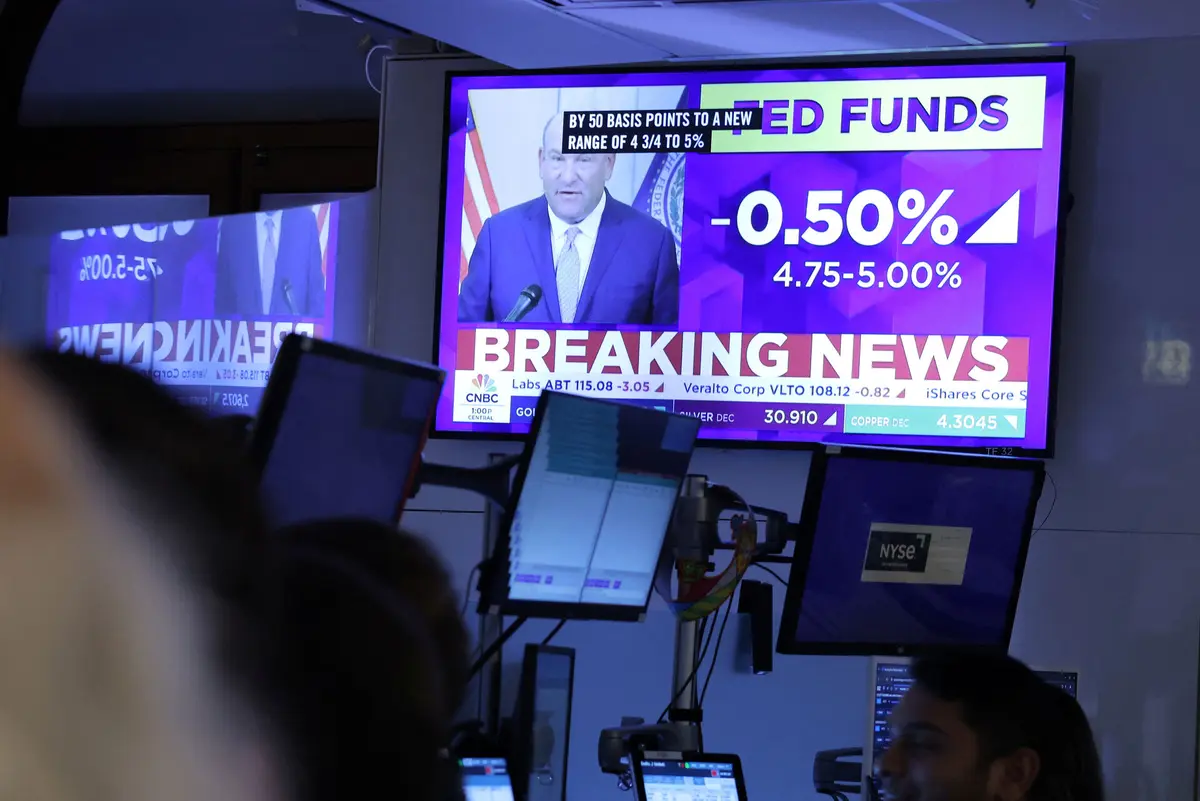
The US central bank, the Federal Reserve, on Wednesday lowered interest rates in the United States for the first time in four years. The 'Fed' reduced the key lending rate by half a percentage point, to a range of 4.75 percent to 5 percent, it said in a statement.
The effects of the move are likely to affect saving rates as well as mortgages for people all around the world -- including Denmark.
A decision to reduce interest rates in the US had been anticipated, with inflation in the country falling from 3.3 percent to 3.0 percent between May and June this year, when prices were up by 0.1 percent according to the US Bureau of Labor Statistics -- a notably low figure.
With the US now reducing its interest rate, there is a likelihood of the American economy eventually pushing down interest rates on mortgages in Denmark.
“It’s certainly good news for Danes who are hungry for slightly lower interest,” senior economist Tore Stramer of the Danish Chamber of Commerce said of the situation in the United States on July 11th.
Interest rates in Denmark, including on mortgages, have been higher since 2022 compared to previous years, when they were often close to zero.
That has made it harder for many households to make ends meet as well as for first-time buyers to get on to the property ladder.
Denmark’s central bank, Nationalbanken, follows the interest rate policy of the European Central Bank (ECB) but is nevertheless influenced by monetary policy in the US.
READ ALSO: Denmark’s central bank in new interest rate cut
That is because interest rates in the US affect financial markets and thereby how bank advisers in Denmark assess mortgage applications.
“So it will be felt in Denmark in the form of lower interest rates when you buy a house,” Stramer said in the summer.
Trends towards lower interest rates are already evident in Denmark.
The ECB lowered its lead interest rate in June by 0.25 percent, and again in September. Denmark's central bank, Nationalbanken, followed suit on both occasions in line with Denmark's practice of tying the krone's value to the euro.
US trends can be interpreted as evidence that interest rates have peaked, chief economist Brian Friis Helmer of Arbejdernes Landsbank said to newswire Ritzau in July. They could also drop further, he speculated.
“We can hope that they get lower but we have to get a bit further into this year before that happens,” he said.
Comments